First-person view of a gamer's hand on a gaming mouse with an FPS crosshair visible on the monitor screen in a dark room with monitor backlighting
Aim Test Guide for FPS Gamers
Content
You've probably spent dozens of hours in ranked, wondering why your aim feels inconsistent. One match you're hitting headshots. Next game you whiff basic sprays. The real issue? You're flying blind. No data means you can't tell if that $80 mouse actually helped or if your new desk setup ruined your performance.
Weekly aim testing—literally 10 minutes—gives you numbers instead of gut feelings.
Nobody trains for a marathon without tracking their mile times. Your crosshair deserves the same respect.
What Is an Aim Test in Gaming?
You load into a match. Miss three straightforward kills. Immediately think "wow, I'm playing like garbage today."
But what broke down exactly? Were you overshooting targets? Reacting slowly? Losing control during sprays?
Aim tests isolate these variables. You get measured performance on specific skills—no teammates to blame, no utility combos to distract you, no excuses about map knowledge.
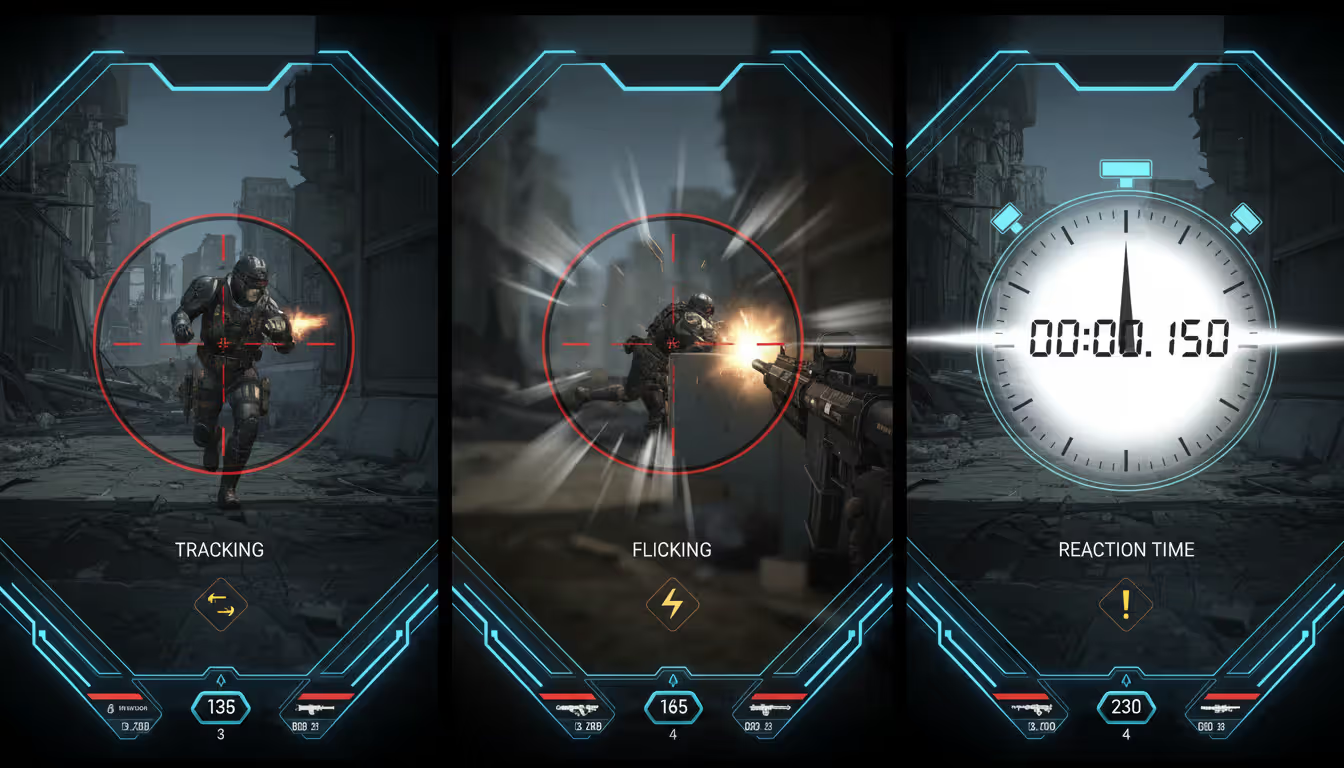
Most tests cover three areas. Tracking means following targets as they move, similar to maintaining crosshair contact with someone strafing left-right unpredictably. Flicking measures snap shots—when someone peeks mid and you have 0.3 seconds to click their head. Reaction time quantifies the milliseconds between seeing a target and firing.
Testing beats casual play for several reasons.
Warmups get your hands moving before ranked without the stress of losing RR or ELO. You're activating motor patterns, building session confidence, getting blood flow to your fingers. Bought a new mouse? One testing session immediately shows whether your scores jumped 15% or dropped off a cliff. After months of logged data, you'll know definitively whether your practice routine works or wastes time.
What counts as good aim? Completely depends on your goals. Hitting 65% accuracy on tracking drills might feel amazing at Gold but terrible if you're pushing Immortal. I've watched players with mediocre flick speed dominate through crosshair placement, while others have insane reflexes but lose gunfights constantly because they're aiming at chest level.
How to Test Your Aim in FPS Games
Three main approaches exist. Each has clear trade-offs.
Browser-Based Aim Trainers
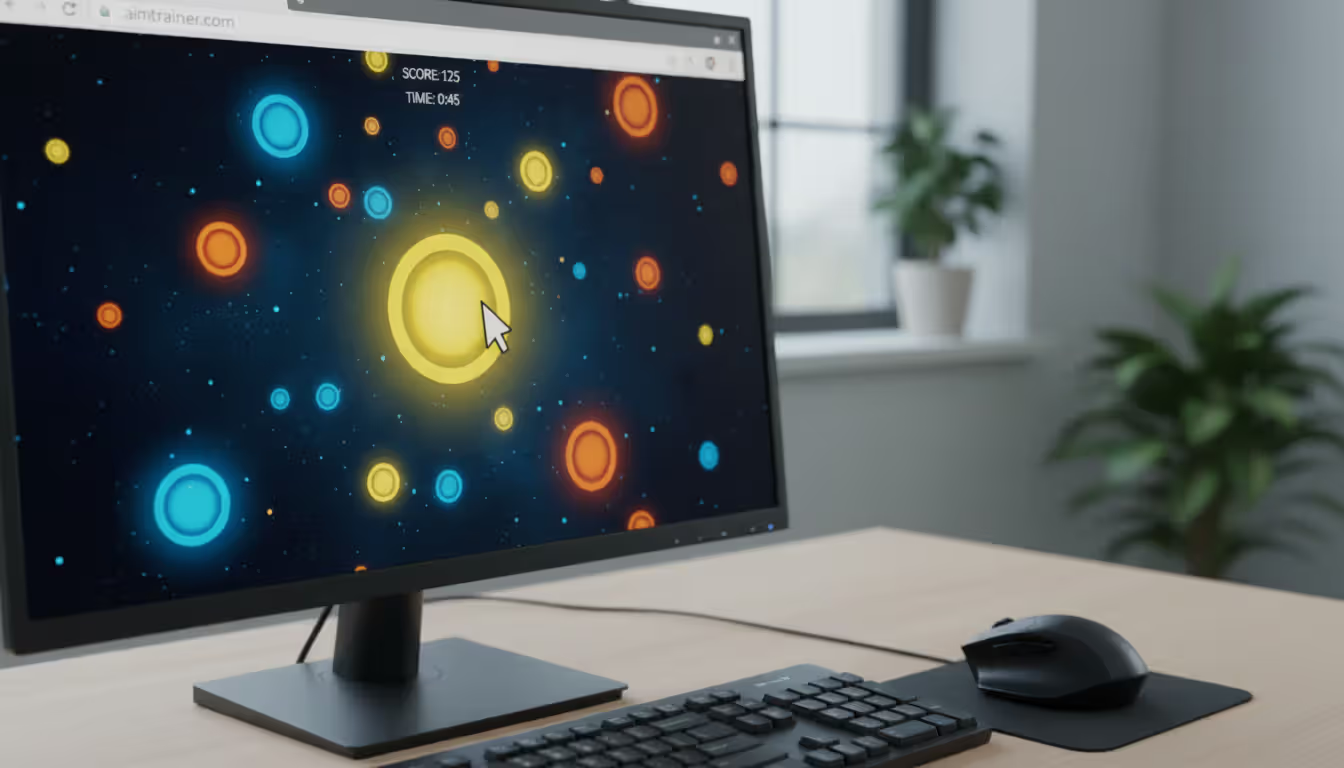
Websites like 3D Aim Trainer load in seconds. No download. No payment. Just open Chrome and start clicking.
Author: Tyler Vance;
Source: okogames.site
You'll get basic scenarios—timed clicking exercises, circular tracking, grid patterns. Great for quick warmups when you're at a friend's house or testing a different setup.
Downside? Almost zero customization. These don't replicate CS2's movement acceleration or Valorant's first-shot inaccuracy mechanics. You're practicing generic mouse control, which helps foundational skills but doesn't transfer perfectly. Browser-based tools also introduce variable input lag depending on your setup—Chrome might feel smooth while Firefox stutters, making consistent progress tracking basically impossible.
In-Game Practice Modes
Load Valorant's Range. Boot a CS2 workshop aim map. Jump into Apex's Firing Range.
The upside? Perfect mechanical replication. Identical recoil patterns, identical movement physics, identical hitreg quirks. Zero adjustment period when you queue ranked afterward.
What you lose: analytics. Maybe you hit 18 out of 25 shots. Cool. Was that better than last week? How do Diamond players perform on this same drill? Most in-game modes give you nothing—no statistics, no historical tracking, no comparative benchmarks. You're guessing whether you improved or just had a lucky run.
Author: Tyler Vance;
Source: okogames.site
Dedicated Aim Training Software
Aim Lab and KovaaK's run about $10-15. Both completely transform how you approach practice.
You get hundreds of scenarios. Detailed performance breakdowns. Global leaderboards showing your exact percentile. Aim Lab has a cleaner interface—better for beginners navigating progression systems. KovaaK's attracts advanced players who want frame-perfect scenario customization matching specific games.
These platforms track everything. Accuracy percentage. Average time-to-target. Target switching efficiency. Performance consistency across 50+ sessions. You can filter scenarios by skill type—pure tracking work lives in one category, reactive flicking in another. The software literally highlights which subcategory tanks your overall score.
Top players treat these programs like athletes treat film study. Daily sessions, tracked metrics, deliberate weakness-targeting.
Understanding Aim Mechanics and What Makes Good Aim
Players chase the feeling of improvement instead of actual results. Test your current sensitivity for two solid weeks before changing anything. If tracking improves but flicking drops, that's not a sensitivity issue—it's a training gap. Consistent settings let you identify real weaknesses instead of blaming equipment
— Ron Kim
Speed looks sick in Twitch clips. Consistency wins tournaments.
Someone maintaining 72% accuracy across an entire series will outfrag the player swinging between 95% on comfortable angles and 35% under pressure. Reliability beats peak performance every time.
Crosshair placement matters more than most realize. Strong players pre-aim common angles before enemies appear—their crosshair already sits at head level where opponents will peek. This converts game knowledge into mechanical advantage by minimizing required corrections. Bad placement forces constant large adjustments under time pressure, making easy shots unnecessarily difficult.
Hand-eye coordination in gaming describes your brain translating visual input into accurate motor output. Different from pure reaction speed. Some players move their mouse lightning-fast but overshoot by 10 pixels constantly. Others make slower, controlled motions landing precisely on target. Same reaction times, completely different outcomes. Coordination quality determines execution accuracy.
Muscle memory develops through repetition until movements become automatic. After enough reps, specific flick distances require zero conscious thought. This explains why sensitivity changes feel terrible initially—you've programmed muscle memory for particular movement distances, and new settings invalidate that stored data. Rebuilding typically demands 20-30 hours minimum. No shortcuts exist.
Most players naturally lean tracking or flicking. Tracking specialists dominate with sustained-fire weapons like LMGs, maintaining damage output during extended trades. Flicking specialists prefer one-tap weapons, capitalizing on superior first-shot accuracy. Neither style is objectively better, but recognizing your natural tendency helps you choose appropriate agents, weapons, and map positions.
Mouse Sensitivity Settings and Aim Performance
Sensitivity determines how far your crosshair moves per centimeter of physical mouse movement. Low sens demands big arm swipes for 180s but enables pixel-precise micro-adjustments. High sens enables quick flicks with tiny wrist movements but makes small corrections shakier.
eDPI (effective DPI) standardizes comparisons by multiplying mouse DPI times in-game sensitivity. Example: 800 DPI × 0.5 sens = 400 eDPI, exactly matching someone running 1600 DPI × 0.25 sens. Both produce identical crosshair movement despite different underlying numbers. This lets you compare configurations across different games and hardware accurately.
Finding your optimal sensitivity requires systematic testing. Start around 250-400 eDPI for tactical shooters like Valorant or CS2. Try 500-800 for faster games like Apex or Overwatch. Play 30-45 minutes at each setting, then run standardized tracking and flicking tests. Your ideal sensitivity balances comfortable target following with the ability to check corners behind you without multiple mousepad resets.
Sensitivity Comparison
| Sensitivity | eDPI Range | Strengths | Weaknesses | Best For | Pro Examples |
| Low | 150-350 | Pixel-level micro-adjustments, stable long-range tracking, easier spray control | Requires XL mousepad, slower target switching, physically demanding | Anchor positions, AWP/Op, long angles, holding tight peeks | TenZ (CS2): ~280, ScreaM (Valorant): ~312 |
| Medium | 350-600 | Works across all engagement ranges, moderate physical strain, versatile for most playstyles | Doesn't excel at extremes, requires solid fundamental technique | Flex roles, mixed-range fights, general skill development | Shroud: ~420, s1mple: ~520 |
| High | 600-1200+ | Lightning flicks, minimal desk space needed, effortless 180s, reduced physical effort | Shaky micro-corrections, unstable tracking, difficult recoil management | Entry fragging, close-quarters maps, high-mobility characters | Aceu (Apex): ~800, Hiko (older settings): ~1040 |
Common Mistakes When Testing and Training Your Aim
Starting tests cold produces useless data. Muscles need warmup. Neural pathways need activation. Jumping straight into testing is like sprinting without stretching—you'll underperform and draw wrong conclusions about your actual ability. Spend 5-10 minutes on easy scenarios first.
Changing settings between sessions makes comparisons meaningless. Testing at 800 DPI Monday, 1600 DPI Wednesday, 400 DPI Friday? You're not measuring improvement. You're testing different configurations. Even minor tweaks like adjusting polling rate from 500Hz to 1000Hz affect muscle memory enough to skew results. Lock everything for minimum two weeks before evaluating effectiveness.
Another huge issue: exclusively practicing what you're already good at. Someone scoring poorly on vertical tracking who only practices horizontal drills will see minimal overall improvement. Tests reveal these gaps specifically so you can address them. Spend roughly 60% of practice time on weaknesses, 40% maintaining strengths.
Overtraining identical scenarios creates false proficiency. Players grinding the same Gridshot variation for hours develop pattern recognition specific to that exact drill, not transferable aiming skill. They memorize spawn locations and timings. Rotate through 4-5 varied scenarios each session, focusing on underlying skills rather than optimizing specific patterns.
Author: Tyler Vance;
Source: okogames.site
How to Improve Your Aim Based on Test Results
Raw scores mean nothing without analysis. After each session, identify which specific metrics dropped. Did accuracy decrease? Target acquisition slow down? Small targets versus large targets showing different results? Each pattern suggests different solutions.
Low tracking with high flicking? Your smoothness needs work. Practice slow-moving target scenarios, minimizing crosshair deviation from center mass. Consider slightly lowering sensitivity if you consistently overshoot. Strong tracking but weak flicking means you need reactive scenarios featuring targets spawning suddenly at random angles.
Build structured 30-minute routines instead of random drilling. Try this progression: 5 minutes easy tracking warmup, 10 minutes on your weakest category, 10 minutes game-specific scenarios, 5 minutes high-intensity clicking. This sequence warms up mechanics, addresses deficiencies, maintains transferable skills, ends with confidence-building performance.
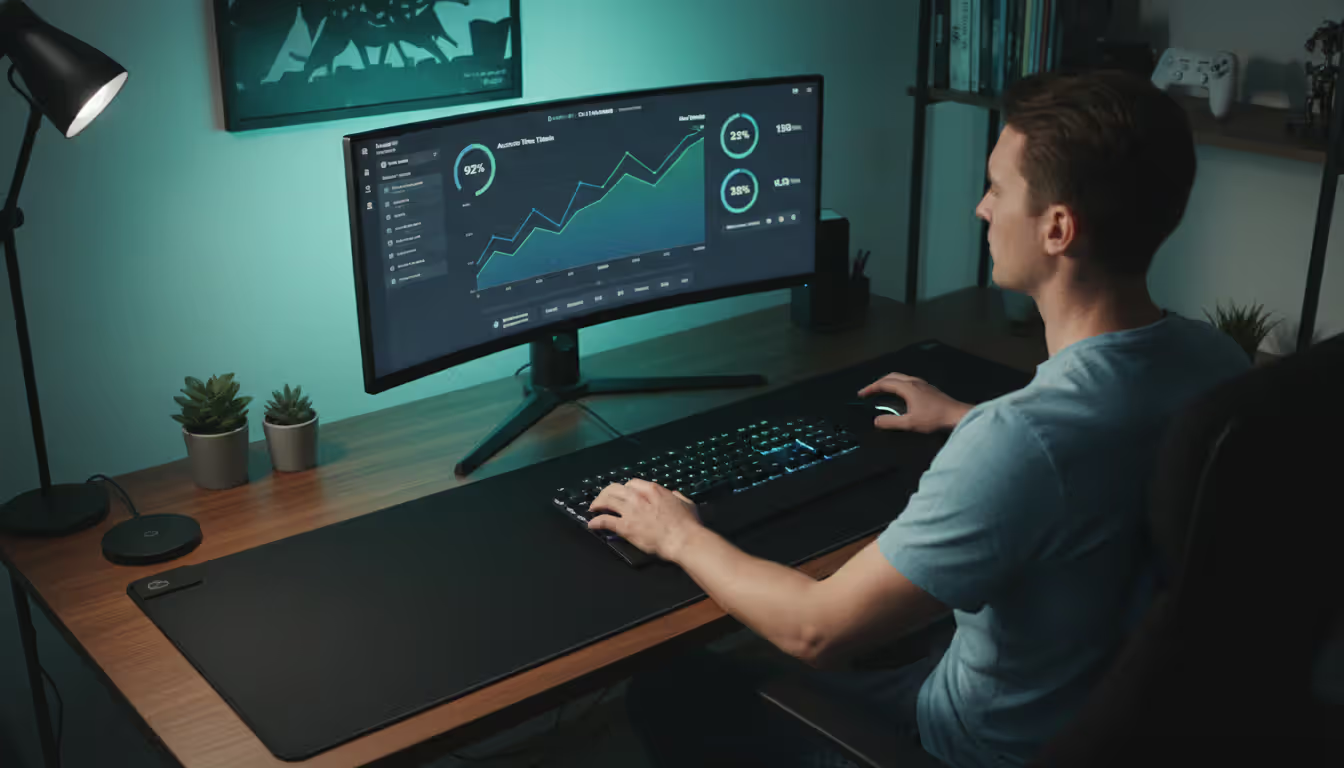
Track progress through consistent metrics logged in a spreadsheet. Record your top three scenario scores weekly. Graph results monthly. Improvement rarely follows straight lines—expect plateaus and occasional dips. The 4-6 week trend matters infinitely more than daily fluctuations. Scores stagnating despite consistent practice signals time to change routines or address peripheral factors like posture, mouse grip, mousepad wear.
Benchmark against realistic standards. Comparing yourself to TenZ or s1mple creates pointless frustration. Check average scores for your rank in your main game instead. Aim Lab and KovaaK's show percentile rankings among all users. Hitting 60th percentile means above average. 80th percentile indicates strong fundamentals. 95th+ represents competitive-level mechanics.
FAQ
Testing transforms vague impressions about your shooting into concrete numbers. Players who actually improve versus players who just "practice"? They identify specific weaknesses through testing, address them with targeted drills, track progress objectively over time.
Start simple. Pick one free browser trainer or grab Aim Lab for $10. Test baseline scores across tracking and flicking scenarios. Commit to locked settings for one full month. Focus practice on your lowest-scoring categories while maintaining strengths. Retest monthly and adjust based on which metrics improve versus stagnate.
Your mechanics won't transform overnight. Systematic testing plus deliberate practice compounds into serious advantages over months. A player shooting 15% more accurately doesn't win every duel, but across hundreds of engagements per session, that edge translates to higher ranks, more clutch rounds, mechanical foundation to execute strategies that currently feel impossible.