
Retribution Paladin in glowing plate armor holding a massive two-handed sword surrounded by golden holy energy in a raid arena
Ret Paladin BiS Guide

Content
Getting top-tier DPS on your Retribution Paladin isn't just about having good gear—you've got to understand why certain pieces work better than others. I've seen plenty of players with near-perfect BiS lists who still parse gray because they don't grasp how stats interact with their rotation.
This guide breaks down everything: what gear to hunt, which stats actually matter (and which ones don't, despite what trade chat tells you), and how to squeeze every bit of damage from your character. Let's get into it.
Understanding Retribution Paladin Stat Priority
Here's the thing about ret stat priority—it's not as simple as "stack this one stat forever." Your priorities shift as you improve your gear, and what works in pre-raid blues might not be optimal once you're swimming in heroic tokens.
Primary Stats and Their Impact
Strength wins. Period. Each point gives you attack power that boosts literally everything you cast. Your Templar's Verdict? Hits harder. Crusader Strike? More damage. Even your auto-attacks benefit. When you're comparing two pieces of gear, the one with more strength usually wins even if the secondary stats look worse.
Stamina keeps you alive when the raid takes a dirt nap, but you shouldn't pick a lower item level piece just for stamina. Dead DPS do zero damage, but so do overly-cautious paladins who gear like tanks.
Secondary Stat Weights and Breakpoints
You'll hear this hierarchy thrown around: Hit Rating (to cap) > Expertise (to cap) > Haste > Mastery > Critical Strike. That's mostly right, but let me explain the nuance.
Hit rating comes first, no debate. Miss a Templar's Verdict and you've just dealt exactly zero damage. You need 961 hit rating—that's 8% hit chance against raid bosses. Can you run 7% if you've always got a Draenei in your group? Sure, but good luck explaining to your raid leader why your DPS tanked when Shamans got moved to the other group for better cooldown coverage.
Expertise sits right behind hit. The soft cap is 26 expertise (that's 6.5% on your character sheet), which stops bosses from dodging your attacks. There's technically a hard cap at 56 expertise that prevents parries too, but since bosses don't parry attacks from behind, you'd be wasting itemization. Hit the soft cap and move on.
Author: Ethan Rowland;
Source: okogames.site
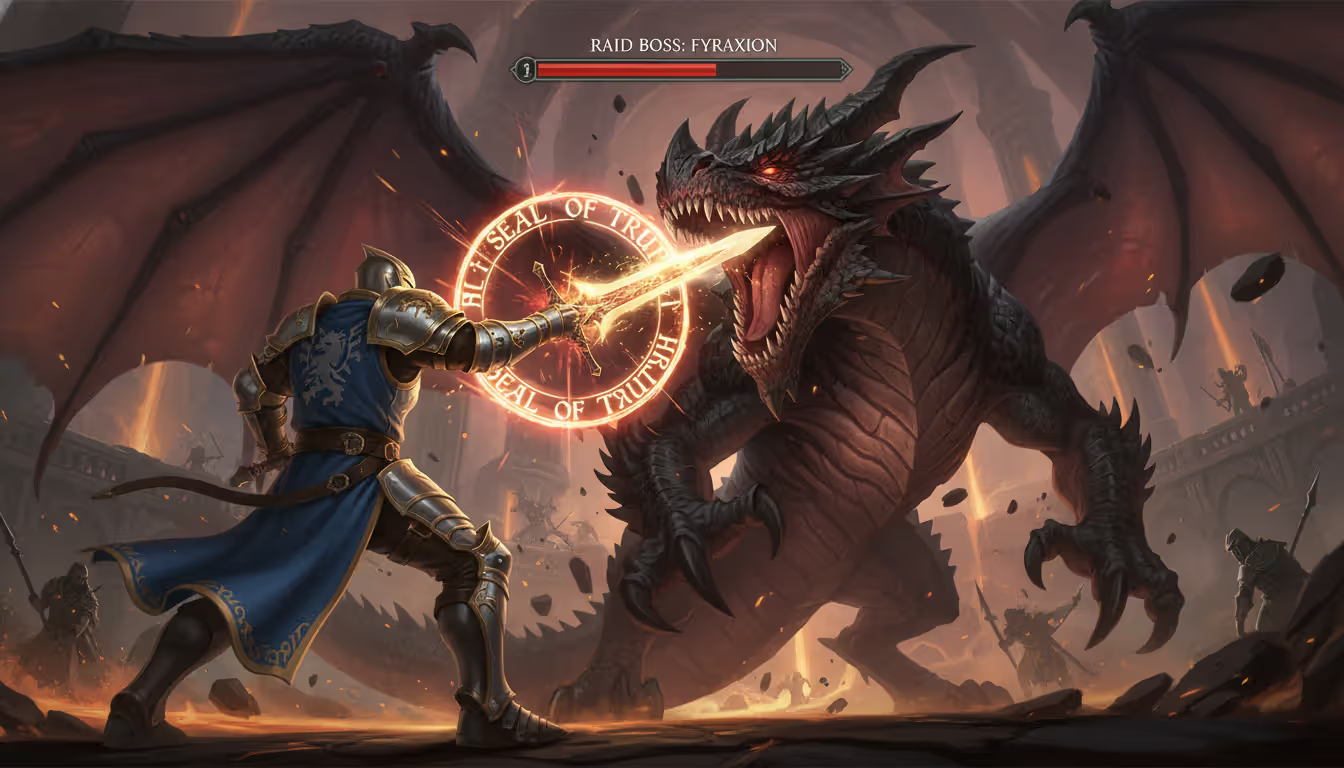
Haste speeds up everything. Your global cooldown drops, Crusader Strike comes off cooldown faster (thanks to Sanctity of Battle), and you generate Holy Power like crazy. Once you're maintaining Inquisition properly, haste becomes incredibly valuable. More GCDs per fight = more Templar's Verdicts landing.
Mastery increases your Hand of Light damage, which is a fancy way of saying "your abilities hit harder." It's particularly strong during execute phases when you're spamming Hammer of Wrath between Templar's Verdicts. Solid stat, just not as universally strong as haste.
Critical strike? Look, crits feel great. That big yellow number pops up and you feel like a champion. But ret paladins don't have the crit multipliers that make it dominant for, say, a fire mage. You get some value from Art of War procs triggering off crits, but haste's consistency beats crit's randomness nine times out of ten.
Best-in-Slot Gear for Retribution Paladins
Building your BiS set takes time. Tokens go to the other paladin in your raid, specific bosses refuse to drop loot, and sometimes you just need functional gear now instead of perfect gear three lockouts from now.
Pre-Raid BiS Gear List
Before you set foot in raids, you can assemble a surprisingly strong set from heroic dungeons, reputation vendors, and crafted pieces.
Head: Grab the Reinforced Sapphirium Faceguard from heroic Halls of Origination. If Rajh refuses to drop it (and he will, because loot tables hate you), the Justice Points helm works fine.
Neck: Farm heroic Grim Batol until you get Amulet of Dull Dreaming off the final boss. The hit and haste combo is exactly what you want.
Shoulders: Don't waste time farming dungeon shoulders. Buy Caridean's Epaulettes with Justice Points and move on—you'll replace them with tier shoulders soon enough.
Chest: Chestplate of the Steadfast drops in heroic Blackrock Caverns. Decent strength, acceptable secondaries, gets the job done.
Wrists: If you're a Blacksmith, craft Bracers of Impossible Strength. If not, consider dropping a profession for it—bracers with sockets are that good.
Hands: Grips of the Failed Immortal come from heroic Halls of Origination and provide expertise, which helps you hit the soft cap before raids.
Waist: Corded Viper Belt is crafted by leatherworkers. The advantage? You can customize stats through reforging to patch holes in your hit or expertise.
Legs: Legguards of the Emerald Brood require reputation grinding, but at least it's deterministic. No praying to RNG gods.
Feet: Treads of the Penitent Man drop in heroic Lost City. Movement speed plus solid stats make these worth farming.
Rings: Stack Signet of the Elder Council and Ring of Dun Algaz from Justice Point vendors. Guaranteed acquisition beats dungeon RNG.
Trinkets: Magnetite Mirror and License to Slay from heroics fill these slots adequately until raid trinkets drop. They're not amazing, but they work.
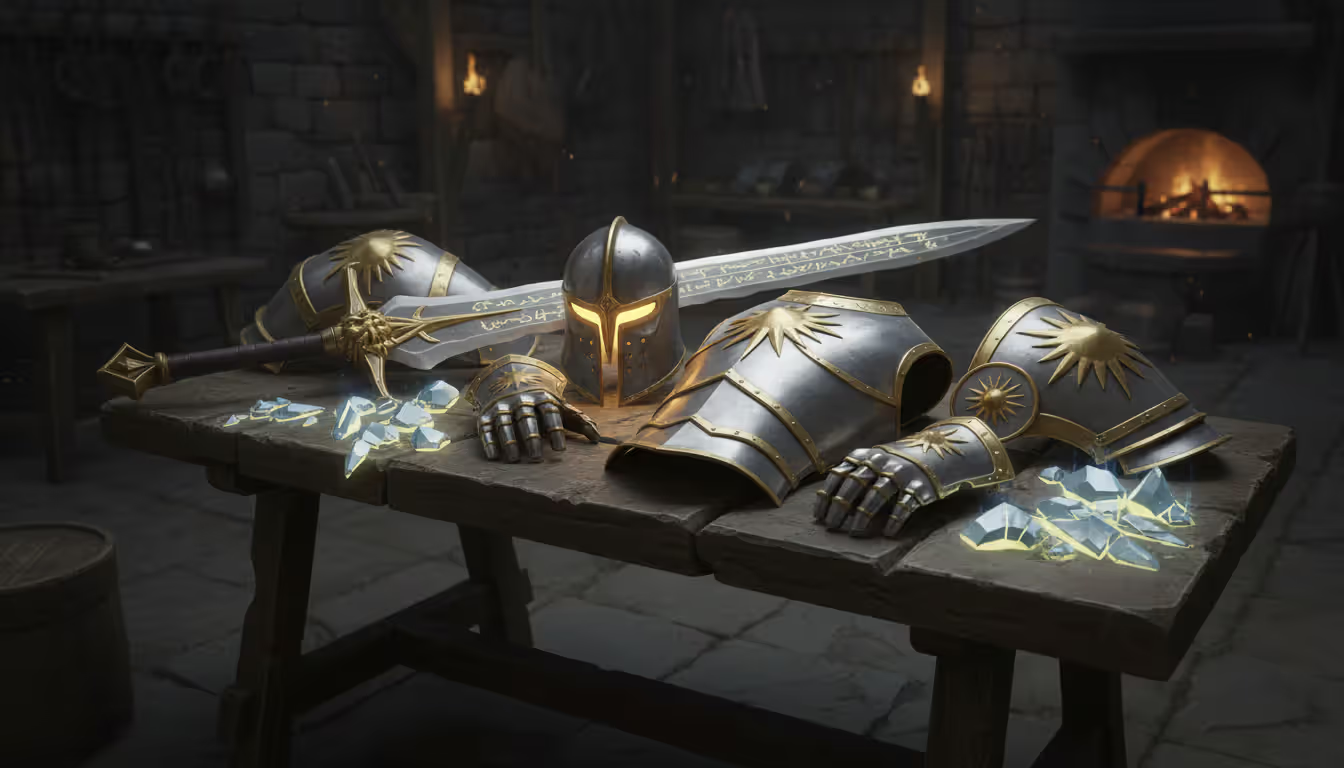
Weapon: Zin'rokh, Destroyer of Worlds from archaeology is legitimately excellent—if you can stomach the time investment. Otherwise, Sword of the Bottomless Pit from Justice Points guarantees you a workable weapon immediately.
Author: Ethan Rowland;
Source: okogames.site
Raid BiS Gear by Slot
Current raid tier offers massive upgrades. Tier sets bring bonuses that fundamentally change how you play.
The two-piece reduces Crusader Strike's cooldown, pumping out Holy Power faster. Four-piece buffs Guardian of Ancient Kings significantly. Both bonuses are strong enough that you'll sometimes wear tier pieces even when off-set alternatives have slightly better stats.
Collecting Tier Pieces: You can cover tier slots with helm, shoulders, chest, gloves, or legs—pick five from those options. This flexibility lets you optimize around particularly strong off-set pieces in certain slots.
Strong Off-Set Options: Some non-tier items outperform tier equivalents by enough margin to matter. Bracers with perfect stat distribution, necks with ideal secondaries, strength rings—these deserve consideration before automatically equipping every tier piece you see.
Weapons matter most. A two-hander with high top-end damage, strength, and good secondaries should be your absolute top priority. Your weapon contributes more to DPS than any single armor piece, period.
Alternative Gear Options and Upgrades
Real raiding means dealing with bad RNG. Tokens go elsewhere, bosses drop the same belt four weeks straight, and you need functional upgrades now.
Evaluate alternatives with these questions: Does it maintain my hit and expertise caps? Does it have strength? Are the secondary stats at least 60% optimal? Three "yes" answers mean the piece works as a stopgap.
Reforging saves mediocre itemization. Convert excess crit into haste, shift unwanted mastery toward expertise when you're running short. Every piece you equip should get reforged unless it's already perfectly itemized. Don't skip this step—it's some of the best DPS-per-gold you'll spend.
Ret Paladin Talent Tree Optimization
Talent picks split into mandatory damage talents and flexible utility points you adjust based on what you're fighting.
Core Damage Talents
These talents appear in every serious PvE build. No exceptions.
Crusade (3/3): Increases Crusader Strike and Holy Wrath damage by 30%. You cast Crusader Strike constantly, making this mandatory.
Rule of Law (3/3): Boosts crit chance on Crusader Strike and Holy Shock. More crits means more Art of War procs, which means more instant Exorcisms.
Communion (2/2): Returns mana when you cast Templar's Verdict or Divine Storm. Essential for sustained DPS on longer encounters.
Inquiry of Faith (3/3): Reduces Inquisition's Holy Power cost, letting you maintain the buff more easily while still firing off Templar's Verdicts.
Sanctity of Battle (3/3): Makes haste reduce Crusader Strike's cooldown. Creates a positive scaling loop where more haste means more Crusader Strikes, which means more Holy Power, which means more damage.
Selfless Healer (2/2): Increases Word of Glory healing. Mostly useful during progression when healers are struggling and raid utility matters.
The Art of War (2/2): Gives autoattack crits a 20% chance to proc instant Exorcism. Provides meaningful filler damage and keeps your rotation from feeling clunky.
Seals of Command (2/2): Directly increases Seal of Truth damage, which is your primary seal for single-target fights.
Divine Storm (1/1): Mandatory for AoE situations, though you'll rarely press it on pure single-target encounters.
Sanctified Wrath (3/3): During Avenging Wrath, you can use Hammer of Wrath on targets above 20% health. This transforms your burst window from strong to devastating.
Situational Talent Choices
You've got a few points left over for encounter-specific customization.
Long Arm of the Law vs. Pursuit of Justice: Need burst movement after casting Judgment? Take Long Arm. Want passive speed all the time? Pursuit gives quality-of-life. I usually run Pursuit unless a fight requires precise positioning on demand.
Eye for an Eye: Reflects damage back to attackers. Strong on fights with unavoidable raid damage, useless on tank-and-spank encounters.
Repentance vs. Improved Hammer of Justice: Crowd control rarely matters in raids. If you need to stun adds occasionally, Improved Hammer reduces the cooldown.
Sacred Shield: Absorb effects reduce healing requirements. Coordinate with your healers—if they're fine without it, spend the point elsewhere.
Retribution Paladin Rotation and Burst Windows
Having perfect gear means nothing if your execution is sloppy. Understanding priority systems and cooldown alignment separates okay DPS from excellent DPS.
Core Rotation Priority
Ret operates on priorities, not a rigid rotation. Here's your decision tree:
- Keep Inquisition active (never let this drop)
- Hammer of Wrath (during execute or Avenging Wrath)
- Use Templar's Verdict when you've got 3 Holy Power
- Hit Crusader Strike whenever it's available
- Cast Judgment on cooldown
- Fire Exorcism when Art of War procs
- Drop Consecration as filler
- Use Holy Wrath as additional filler (hits harder on undead/demon targets)
Inquisition Management
Letting Inquisition fall off is the single worst mistake you can make. Refresh it at 3-5 seconds remaining. Got 3 Holy Power? Use all three for a longer duration. Only have 1 Holy Power and Inquisition's about to expire? Use that single point—letting it drop costs way more damage than an "inefficient" refresh.
Cooldown Stacking
Avenging Wrath is your big cooldown. Stack Guardian of Ancient Kings on top of it. Pop both together, ideally when your raid uses Heroism/Bloodlust and you've already used your strength potion. During this window, spam Hammer of Wrath on cooldown (it becomes usable on any target during Avenging Wrath), keep Inquisition up, and dump Holy Power into Templar's Verdict.
Hammer of Wrath during Avenging Wrath hits harder than Templar's Verdict and costs zero Holy Power. Prioritize it over everything except maintaining Inquisition.
Holy Power Banking
Don't cap at 3 Holy Power—you're wasting generation. But before major burst windows, bank 2-3 Holy Power so you can immediately unload multiple Templar's Verdicts when you activate cooldowns. Proper banking lets you fit an extra TV or two into your Avenging Wrath window.

Author: Ethan Rowland;
Source: okogames.site
Top Trinket Choices for Ret Paladins
Trinkets create huge DPS variance. The difference between optimal trinkets and mediocre ones can be 500+ DPS.
Top Tier Options
Apparatus of Khaz'goroth gives on-use strength, letting you control exactly when you burst. Line it up with Avenging Wrath for guaranteed value during your hardest-hitting window.
Crushing Weight provides passive strength procs with excellent uptime. Less micromanagement than on-use trinkets, though you sacrifice some burst control.
Essence of the Eternal Flame deals fire damage procs scaling with your attack power. Great sustained damage, particularly valuable on movement-heavy fights where maintaining rotation gets difficult.
Situational Choices
Prestor's Talisman of Machination offers haste procs with decent uptime. Better for players still learning smooth rotation flow than pure damage optimization.
Heart of Rage gives expertise plus strength procs. Mainly valuable when you're balancing expertise cap requirements, less ideal once you've itemized expertise properly elsewhere.
Trinket Pairing Strategy
Combine one on-use with one passive proc. This setup gives controlled burst windows while maintaining consistent passive damage. Running double on-use creates dead periods; double passive sacrifices burst potential. Mix and match for best results.
Common Ret Paladin Gearing Mistakes to Avoid
Author: Ethan Rowland;
Source: okogames.site
Even experienced paladins make optimization errors that quietly murder their DPS.
Ignoring Hit and Expertise Caps
Miss an attack and you've dealt zero damage. I've seen players equip higher item level pieces that push them below cap thresholds. Don't do this. Maintain caps even if it means wearing lower item level gear temporarily. A guaranteed hit always beats higher strength on a missed attack.
Overvaluing Critical Strike
Crit looks appealing, especially if you're coming from a class where it's king. Ret paladins don't have the synergies that make crit optimal. Resist the urge to stack it—haste and mastery give better returns in almost every scenario.
Poor Enchant Selection
Enchants are guaranteed stats. Skipping them or buying cheap versions costs meaningful DPS. Weapon enchant especially matters—Landslide provides substantial attack power procs that significantly boost your damage output.
Neglecting Reforging
Every single piece should pass through a reforge before you gem or enchant it, unless stats already align perfectly (which they won't). Players equip upgrades without reforging and leave excess crit or unwanted stats active. Spend the gold. Seriously.
Misunderstanding Tier Set Value
Breaking tier bonuses for tiny stat increases rarely pays off. The two-piece and four-piece provide substantial DPS boosts that offset individual item differences. Run the math before abandoning set bonuses—you'll usually find keeping them wins.
Weapon Speed Confusion
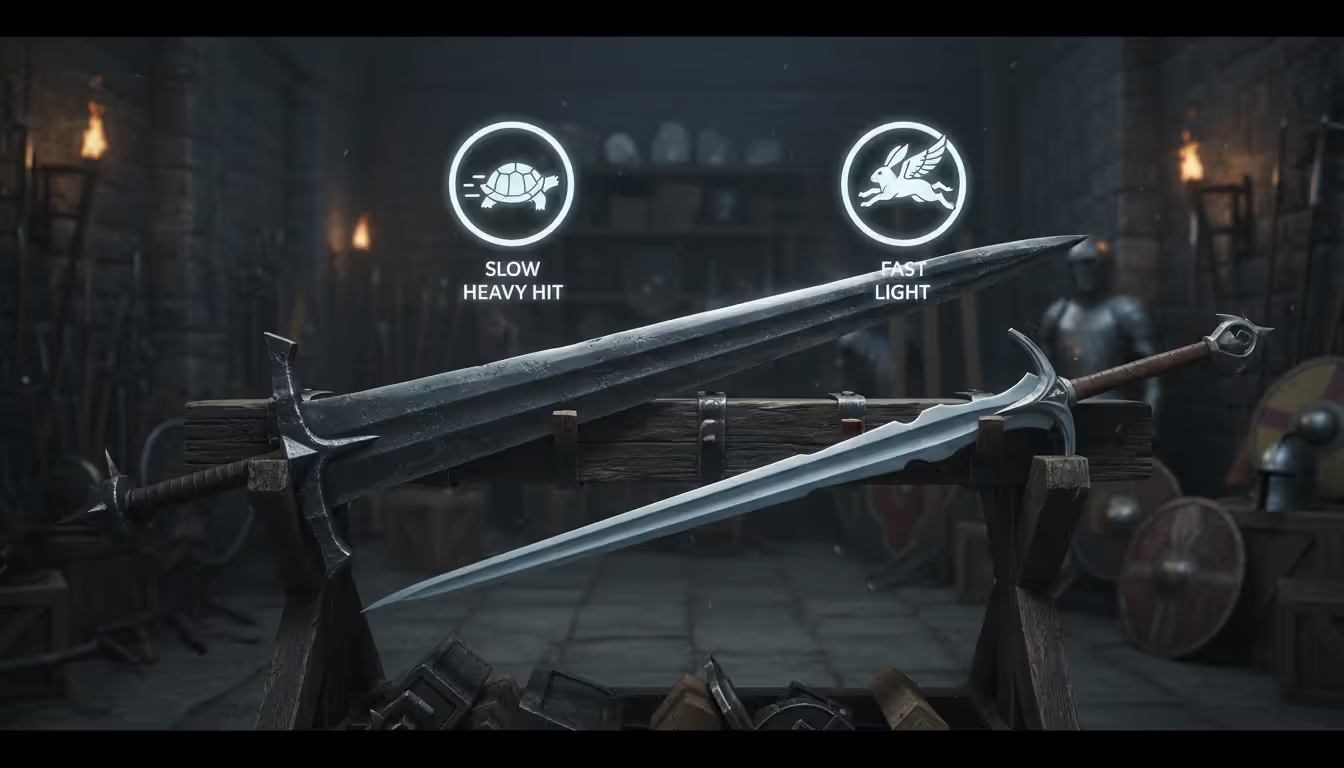
Slower weapons with higher top-end damage outperform faster weapons even at identical DPS. Your abilities scale from weapon damage range, not weapon DPS. Always choose the slowest two-hander available at comparable item levels. A 3.6-speed weapon beats a 3.0-speed weapon every time if they're the same item level.
The gap between good ret paladins and great ones isn't gear—it's understanding why each piece matters. Give two players identical equipment and the one who comprehends stat interactions will consistently parse higher. Master fundamentals before chasing bleeding-edge optimizations
— Sarah Mitchell
Frequently Asked Questions
Optimizing your Retribution Paladin combines multiple skills: grasping stat interactions, targeting best-in-slot gear strategically, picking appropriate talents for specific encounters, and executing proper rotation priorities. Hit and expertise caps aren't optional—missing attacks eliminates potential damage regardless of other optimizations you've made.
Gear acquisition follows a logical path from pre-raid heroic pieces through tier set collection and targeted off-set upgrades. Tier bonuses deliver substantial value that typically outweighs individual item stat optimization. Reforge everything, enchant immediately, gem appropriately.
Talent picks involve core damage talents appearing in every build plus flexible points allocated based on encounter mechanics and raid requirements. Your rotation runs on priorities rather than fixed sequences, with Inquisition maintenance forming the absolute foundation of damage output.
Trinket selection, weapon speed comprehension, and avoiding common gearing mistakes separate competent players from exceptional ones. Small optimizations compound across entire raid encounters, transforming mediocre parses into top-tier performance. Master these fundamentals, understand the reasoning behind each choice, and your ret paladin will consistently deliver the damage your raid expects.