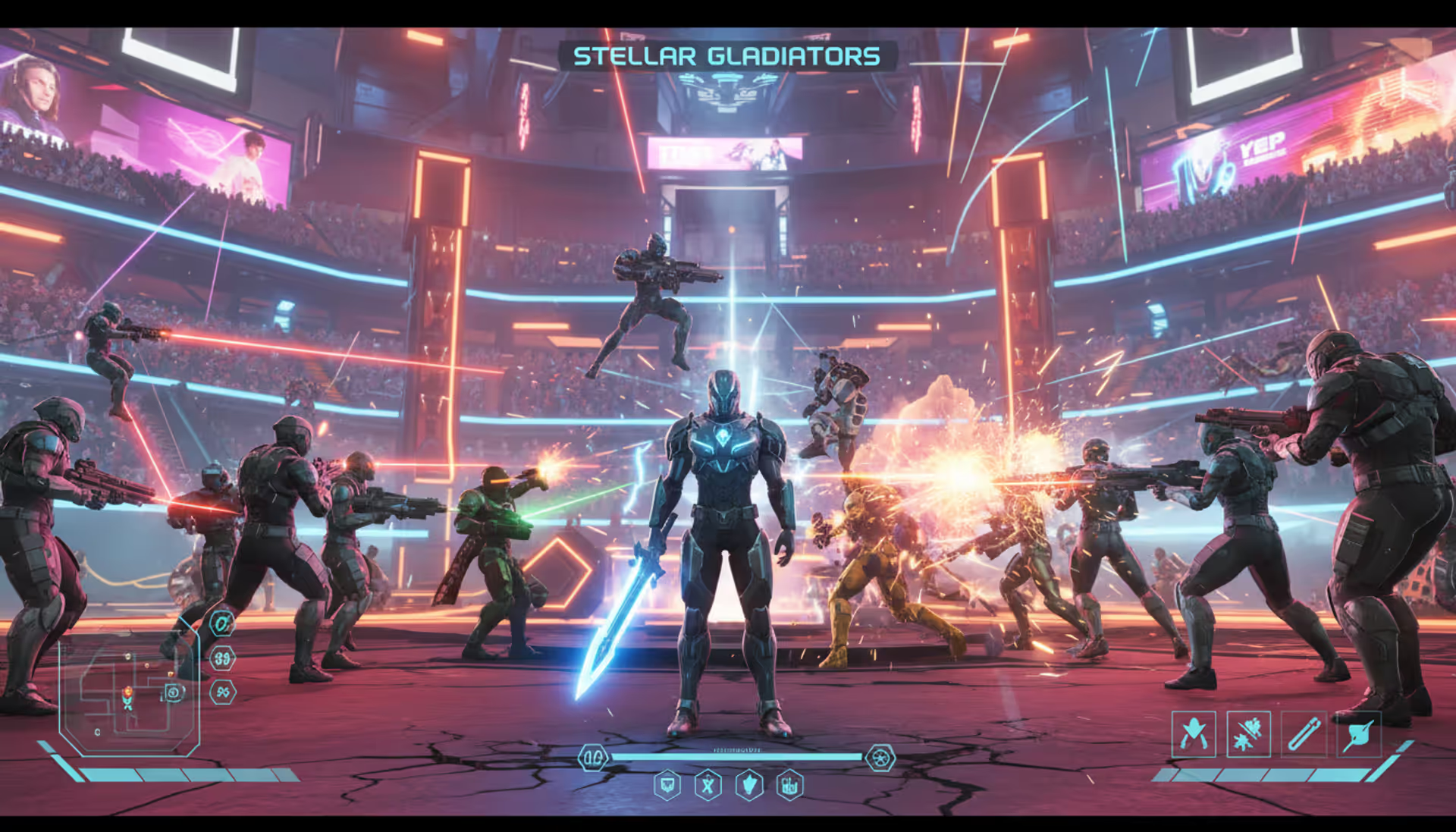
A motionless game character standing idle in the middle of a chaotic multiplayer battle arena while other characters fight around it
What Is AFK in Gaming?

Content
Jump into any multiplayer game and sooner or later, you'll watch someone type "AFK" before their character turns into a decorative statue. If you've been gaming for years, you barely notice. But if you're new? That three-letter code might as well be hieroglyphics—confusing hieroglyphics that just caused your team to lose a 40-minute match. Learning what AFK means isn't some trivial vocabulary lesson. It's understanding basic multiplayer etiquette and avoiding penalties that'll lock you out of games for days.
Understanding AFK Meaning in Games
AFK stands for "Away From Keyboard." You say each letter individually—A, F, K—never like "afk" as its own word. It tells everyone you've physically stepped away from your computer or console and won't be playing for... well, who knows how long.
This phrase started showing up in late '90s text-based MUDs (Multi-User Dungeons) and early MMORPGs when keyboards were the only input method. Players needed fast shorthand to announce they were grabbing pizza without logging out completely. Here's the weird part: the term survived even after console gaming exploded. PlayStation and Xbox players still say "going AFK" despite never touching a keyboard. Language is funny that way.
When someone drops "AFK" in chat, think of it like hanging a "stepped out" sign on their character. The avatar stays loaded into the match but nobody's home. That's different from logging out—and depending on the game, it creates wildly different problems for everyone else waiting around.
How AFK Is Used Across Different Game Types
Whether going AFK ruins the match or barely matters depends entirely on what you're playing. Single-player games? Hit pause. Multiplayer? You're about to discover how much nine other humans value their time.
In MMORPGs like World of Warcraft or Final Fantasy XIV, going AFK barely registers as an offense. Most players park their characters in Stormwind or Limsa Lominsa—safe zones where the worst that happens is someone trades you junk items as a joke. These games usually boot completely inactive players after 30 minutes to free server space. Going AFK mid-dungeon annoys your party, sure, but you won't catch a ban. Just a kicked-from-group and some grumbling on Discord.
MOBAs like League of Legends or Dota 2? Completely different universe. These games demand five coordinated players battling another five for 20-50 minutes straight. One person missing creates a disaster. We're talking objectives lost, gold deficits spiraling, teammates typing in all caps. Even disappearing for two minutes can snowball the enemy team into an unstoppable lead. No pause button. No mercy. No easy comeback.
First-person shooters split the difference. Games like Valorant or Counter-Strike 2 organize matches into rounds, so someone AFK for round three might scramble back for round four. Doesn't make it okay—your team fights 4v5, surrenders map control, wastes abilities on pushes that fail. Respawn shooters like Overwatch 2 let teams compensate slightly, though you're still missing a whole hero's worth of firepower and ultimates.
Casual multiplayer games—Among Us, Fall Guys, party stuff—cut you way more slack. Matches last minutes, not hours. Someone goes AFK? Vote them out, skip their turn, laugh it off. Nobody's filing reports over a five-minute social deduction game. Stakes couldn't be lower.
AFK in Competitive vs. Casual Gaming
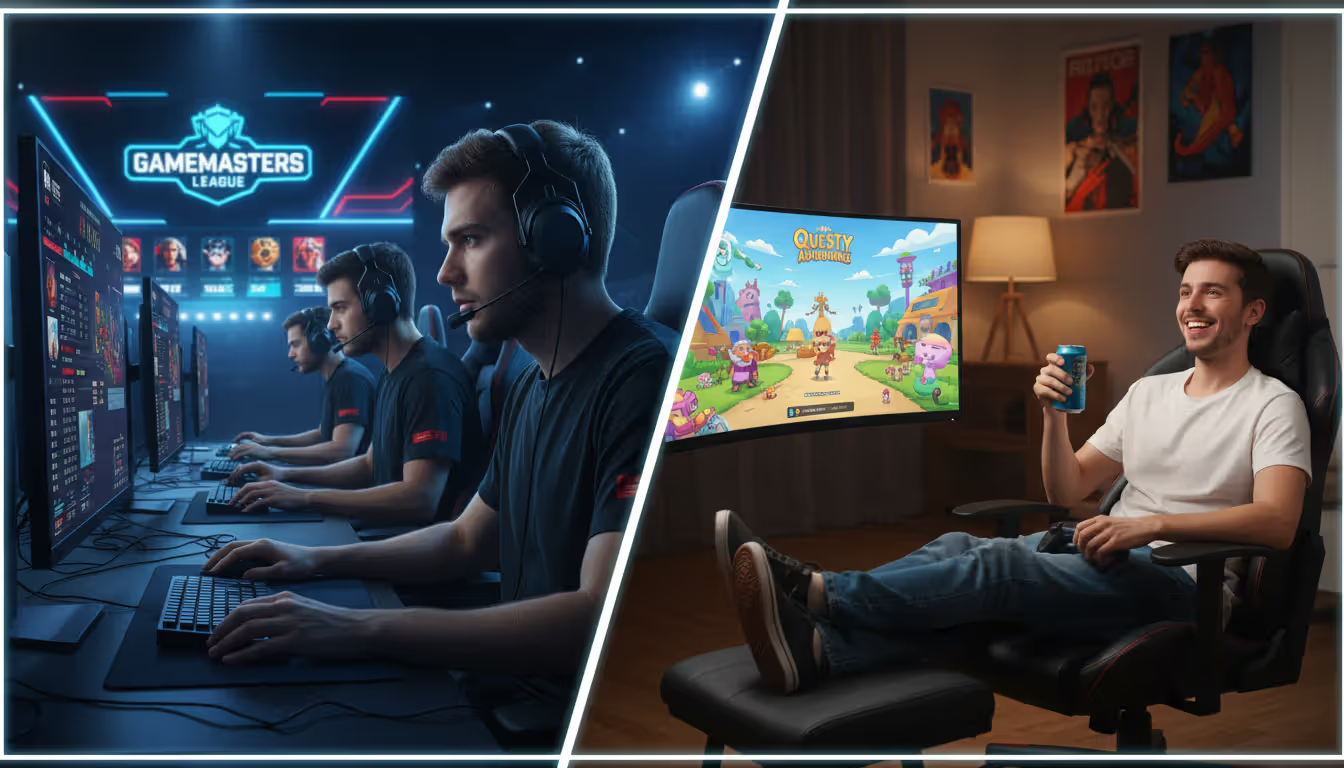
The difference between ranked and unranked modes? Night and day. Competitive queues enforce harsh penalties because people grinding ranks expect teammates who actually care. Go AFK in ranked and you might eat punishment on your first offense, no warnings.
Casual modes understand you're warming up, testing characters, or just goofing around between serious sessions. Detection systems still run but they're slower to trigger and lighter with consequences. Some games ignore casual AFK entirely, though your teammates will still hate you because surprise—people want fair matches regardless of mode.
Author: Tyler Vance;
Source: okogames.site
Common Reasons Players Go AFK
Not everyone who goes AFK is some selfish jerk. Sometimes life barges in without knocking. Knowing why it happens helps separate genuine crises from people who just stopped caring.
Biology wins every time. Bladder hits critical, doorbell rings with that Amazon package, stomach demands food right now. You thought champion select would take another minute—nope, you're loaded in and already missing minion waves. These interruptions last maybe three minutes tops, but three minutes decides plenty of matches.
Family stuff ambushes you constantly if you're over 25. Your kid needs homework help immediately. Your partner asks where the spare batteries are (why now?!). The dog knocks over a plant. Smoke detector picks this exact moment to start chirping. Community polls show household interruptions as the #1 AFK cause among adult gamers.
Tech problems force involuntary AFKs. Internet drops. Game crashes. Power blinks. GPU overheats because you forgot to clean the fans again. From your chair, you're panicking and rebooting everything. From your team's perspective, you vanished mid-teamfight with zero explanation. They can't see your router flashing red or your colorful language.
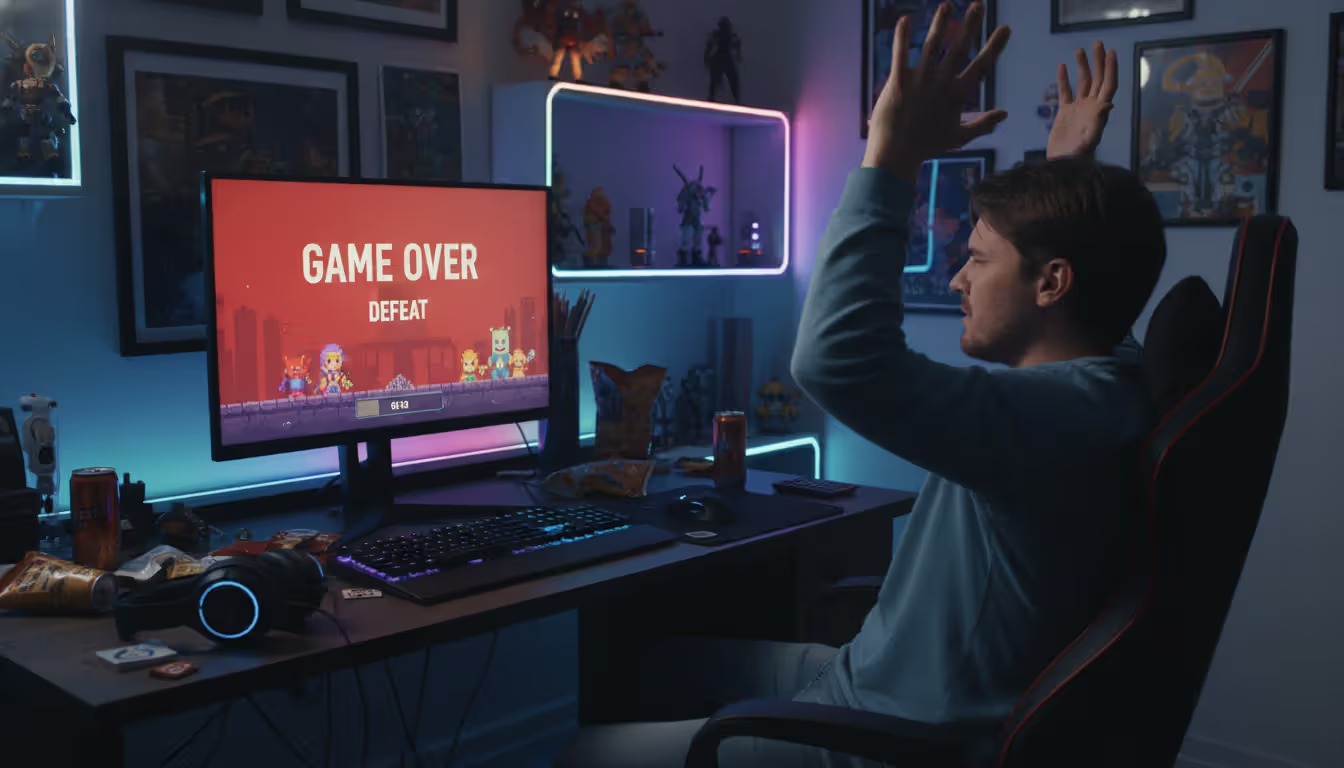
Rage-quitting means deliberately walking away because you're tilted. Died three times in five minutes, teammates are flaming you in chat, match looks unwinnable—so you just... stop. Not a formal quit (that triggers instant penalties). Just stop moving, stop caring, stop trying. Character stands there soaking up deaths while you browse TikTok.
Author: Tyler Vance;
Source: okogames.site
Queue time miscalculations trap people constantly. You queue up, figure you've got three minutes based on last Tuesday's wait, start assembling a sandwich of ambitious complexity, and WHAM—champion select loads with 15 seconds left to pick. You sprint back with mayo on your fingers, but you've already missed strategy discussion and lane calls.
Real emergencies do happen occasionally. Medical situations, actual security concerns, work calls that genuinely can't wait. Nobody reasonable faults you for handling those. But your team still loses a player through no fault of anyone's, which is somehow worse than intentional AFKs because at least those you can get mad about.
Consequences of Going AFK in Multiplayer Games
Modern games run pretty smart detection systems that catch and punish AFK patterns. The whole setup aims to discourage repeat offenders while forgiving the occasional emergency.
Your match implodes first and fastest. Team fights 4v5, objectives fall, defeat seems inevitable. In ranked, everyone on your team loses points—not just you. Your personal stats crater: deaths rack up as enemies discover your motionless body, and you contribute absolutely nothing to damage, healing, or objective time. Zero. Zilch.
Penalty systems escalate predictably. First time going AFK might earn a warning plus five minutes locked out of queuing. Do it again within a week? Now it's 30 minutes, maybe several hours. Keep it up and you're looking at day-long suspensions, then week-long bans. Serial abandoners eventually face permanent account closure, losing everything they purchased or unlocked.
Several games dump offenders into low-priority queues—matchmaking purgatory where you only face other penalized players. Queue times stretch forever, you're teamed with toxic players or fellow abandoners, and you need several clean matches before escaping back to normal matchmaking. It's designed to be miserable enough that you change your behavior.
Reputation tracking follows your account across sessions. Going AFK repeatedly tanks your standing, which might restrict features, reduce rewards, or flag your account for stricter monitoring. Some games show reputation publicly so other players dodge queues when they see you. Scarlet letter, digital edition.
Lost rewards hurt your progression directly. No match XP. No currency. No loot boxes or battle pass advancement. Ranked penalties mean you lose LP, SR, Elo, whatever system your game uses—sometimes including demotion down entire tiers if you're hovering near division borders.
Here's how the big multiplayer games actually handle it:
| Game | First Time AFK | Do It Again | Worst-Case Scenario |
| League of Legends | 5-min timeout from queues | Escalates to 20-min waits, then low-priority queue (5 games) | 14-day account suspension |
| Overwatch 2 | Warning + 10-min timeout | 30 min, 2 hours, 8 hours (keeps climbing) | Banned from competitive for entire season |
| Valorant | 3-min queue penalty | Hours-long timeouts, ranked restrictions kick in | 7-14 days, potentially permanent |
| Fortnite | Brief matchmaking delay | Longer delays each time, ranked bans possible | Case-by-case, rarely permanent |
| World of Warcraft | "Deserter" debuff for 30 min | More deserter debuffs stack up | Permanent bans only for extreme abuse patterns |
Other Essential Gaming Abbreviations Beginners Should Know
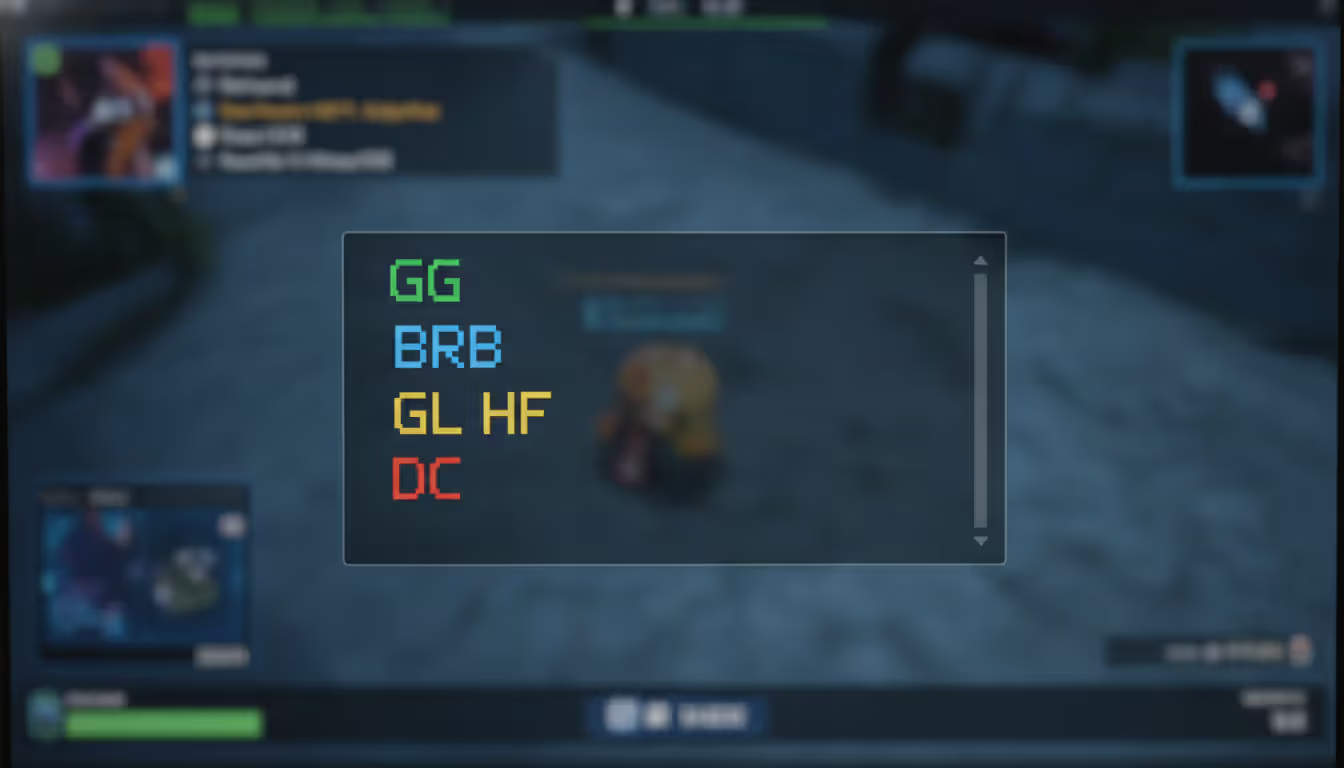
AFK belongs to this whole ecosystem of shorthand that lets players communicate without typing essays mid-match. Learning these speeds up your chat and helps you decode what teammates actually mean.
BRB (Be Right Back) promises a quick absence with a planned return—basically polite AFK. Use it when you need 30-60 seconds and you're definitely coming back. Shows more consideration than just vanishing.
GG (Good Game) shows basic sportsmanship after matches. Type it whether you won or lost—it acknowledges everyone's effort. Skip "GG EZ" (good game, easy) unless you want everyone thinking you're obnoxious, because you definitely sound obnoxious.
GL HF (Good Luck, Have Fun) kicks off matches positively. Sets a friendly vibe and reminds everyone—including yourself—that games exist for enjoyment, not just grinding ranks until you hate everything.
Author: Tyler Vance;
Source: okogames.site
DC or DC'd (Disconnected) explains technical failures rather than choices. If you reconnect, "sry dc" helps teammates understand your router died, you didn't rage-quit after that embarrassing death.
AFK farming means parking your character somewhere to auto-collect resources or XP—common in certain MMOs but bannable in many games if you're using exploits or bots. Some games tolerate it, others nuke your account.
GJ (Good Job) offers quick teammate praise. One successful gank, one clutch heal, type "gj" and watch team morale improve. Positive reinforcement works way better than most players realize, probably because gaming communities default to criticism.
Getting comfortable with these terms helps you communicate faster and actually understand your teammates instead of guessing whether "DC'd" means they're mad or their internet exploded.
How to Handle AFK Players as a Teammate
You're three minutes into ranked, suddenly realizing your top laner hasn't moved since match start. Frustration hits instantly. What you do next affects both match outcome and your mental health for the rest of the day.
Give them 30-60 seconds before typing anything. Maybe they disconnected and they're frantically rebooting. Spamming chat with "WHY AFK???" wastes time and makes you look impatient. They're either coming back or they're not—your complaints won't summon them.
Inform the team with just facts. Simple "top AFK" tells everyone to adapt strategy. Save your feelings for post-match. Right now, matter-of-fact communication helps four people coordinate around the problem.
Shift your entire approach. Play defensive. Dodge risky teamfights. Farm safer. Prioritize objectives that don't need full team commitment. Some 4v5 matches stay winnable if you minimize mistakes and exploit enemy overconfidence. Not many, but some.
Report through official channels afterward. Don't announce it in chat ("enjoy the report loser"). Just use the report system after the match ends. Your report feeds into pattern detection that actually catches serial offenders. Threatening reports accomplishes nothing.
Don't AFK in retaliation. Tempting logic: they ruined the match, why keep trying? Because you're now ruining it for three other people who stayed. Take the L, file the report, move on. Queue again. Next match probably has ten active players.
Skip the harassment entirely. Typing "useless AFK trash" seventeen times won't teleport them back to their desk. Might get you penalized for harassment though, which is hilarious in a cosmic justice sort of way. Too tilted to stay civil? Mute chat and focus on your own gameplay for practice.
Going AFK doesn't just waste 20 minutes for four people. It teaches them that giving up is normal. Every player who tries in a 4v5 makes the community better, even when they lose
— Tyler
Frequently Asked Questions About AFK in Gaming
Getting what AFK means goes beyond learning vocabulary—it's recognizing nine other humans blocked out 30-45 minutes expecting a complete match. Whether you're stepping away or stuck with someone who did, handling it with basic communication and maturity separates salvageable situations from toxic disasters.
These penalty systems exist for solid reasons. Games that ignore AFK behavior become cesspools where abandoning matches feels normal. Systems that punish too aggressively alienate players facing legitimate emergencies. Current escalating structures strike reasonable balance: forgiveness for occasional problems, removal for serial offenders.
Before your next ranked queue, run through a quick mental checklist. Got 30-45 uninterrupted minutes? Internet stable right now? Household stuff handled? These basic checks prevent most AFK incidents and protect your rank plus your teammates' limited gaming time. Seems simple. Constantly gets ignored.
Emergencies slip through despite perfect preparation—that's why they're emergencies. When it happens, take the penalty, apologize if you reconnect, queue again tomorrow. One AFK incident won't destroy your account. Patterns will.