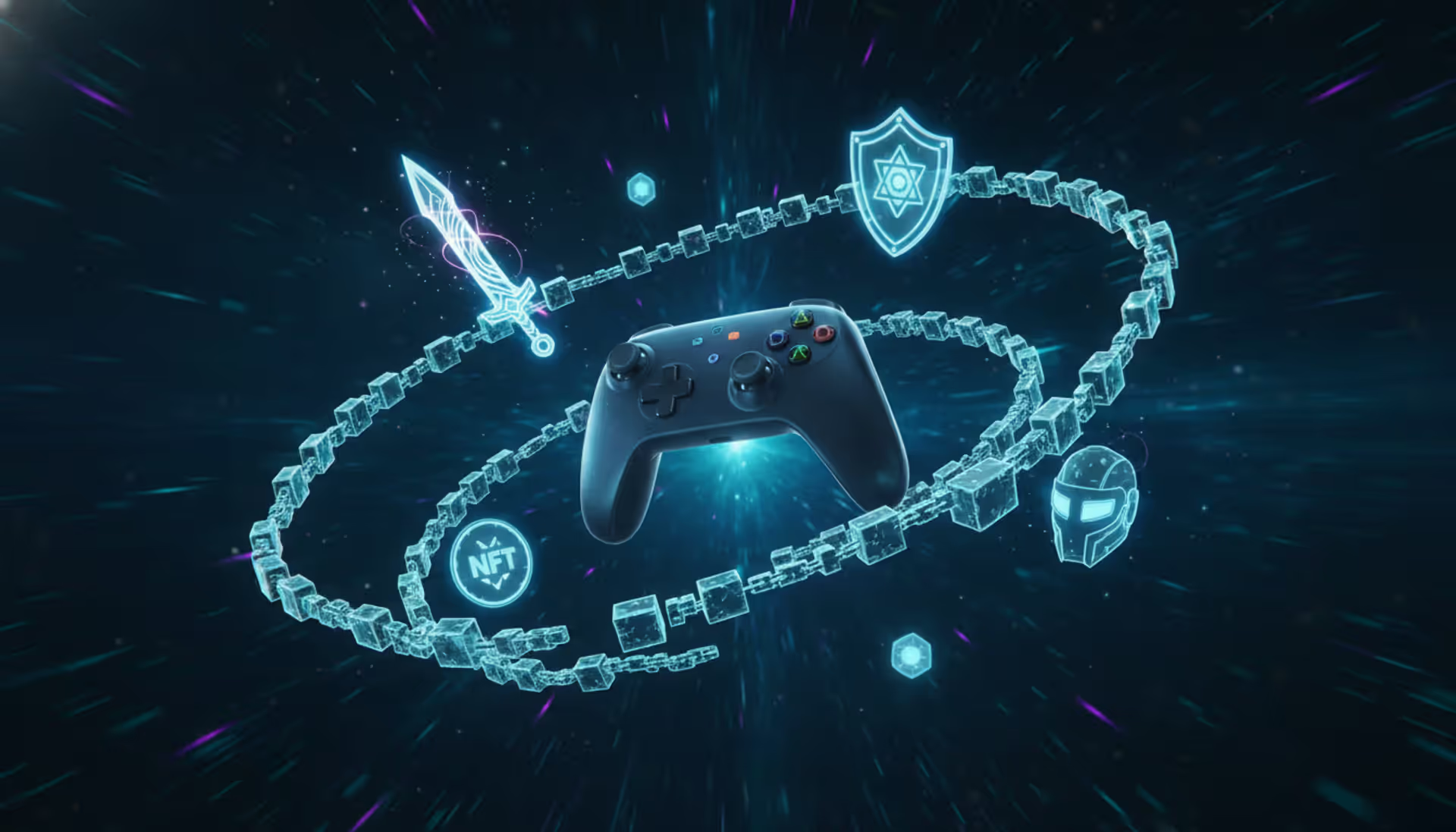
A game controller floating in dark digital space surrounded by glowing blockchain blocks and NFT gaming items like a sword, shield, and helmet with neon blue and purple accents
What Is Crypto Gaming?

Content
Crypto gaming merges blockchain technology with video games, letting players own in-game assets as digital tokens and sometimes earn cryptocurrency through gameplay. Unlike traditional games where publishers control everything you unlock or buy, crypto games record ownership on a blockchain—a distributed ledger that no single company can alter. Your sword, character skin, or virtual land exists as a non-fungible token (NFT) or fungible token tied to your crypto wallet, not locked inside a game server.
When you play a crypto game, you typically connect a wallet like MetaMask or Phantom. The game reads which tokens you own and grants access to those assets. If you earn rewards, they appear in your wallet as cryptocurrency or NFTs. You can trade them on marketplaces, sell them for cash, or move them to other compatible games—at least in theory. The promise is true ownership and open economies; the reality involves technical friction, volatile token prices, and uneven execution across projects.
How Blockchain Technology Powers Crypto Games
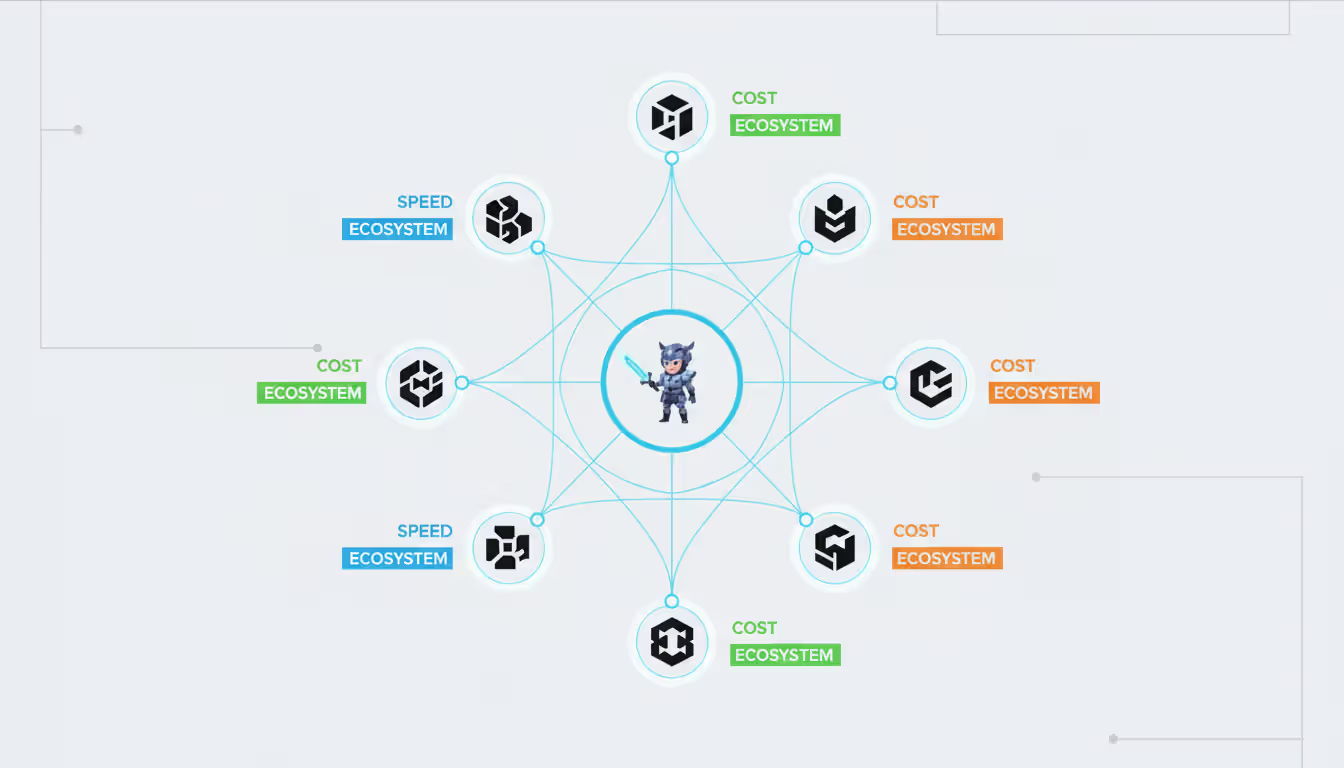
Blockchain games explained: a blockchain is a chain of data blocks, each cryptographically linked to the previous one, maintained by a network of computers instead of a central server. When you acquire an item in a blockchain game, a transaction records that transfer on-chain. Anyone can verify you own that NFT by checking the blockchain explorer. The game developer cannot delete your item or ban your access to it outside the game client, because ownership lives on the public ledger.
Most crypto games run on Ethereum, BNB Chain, Polygon, Solana, or Immutable X. Each blockchain has trade-offs: Ethereum offers the largest ecosystem but higher gas fees; Solana promises speed but has suffered outages; Immutable X targets gaming with zero gas fees for NFT trades. Developers pick a chain based on transaction cost, speed, and community size.
Web3 gaming explained means games interact with decentralized protocols—smart contracts that execute automatically when conditions are met. A play-to-earn game might use a smart contract to mint reward tokens every time you win a match. Because the contract is public and immutable, players can audit the reward rate and token supply. Transparency is the upside; the downside is that bugs in smart contracts can drain treasuries or create exploits, and once deployed, fixes require complex migrations.
Author: Jordan Kessler;
Source: okogames.site
NFTs represent unique items: a legendary weapon, a plot of virtual land, a rare character. Fungible tokens—like the game's native currency—work as in-game money or governance votes. You might earn $GAME tokens by completing quests, then spend them to upgrade your NFT hero or vote on which features the developers build next. Wallets store your private keys, the passwords that prove ownership. Lose your seed phrase, lose your assets permanently—no customer support can recover them.
The Play-to-Earn Model Explained
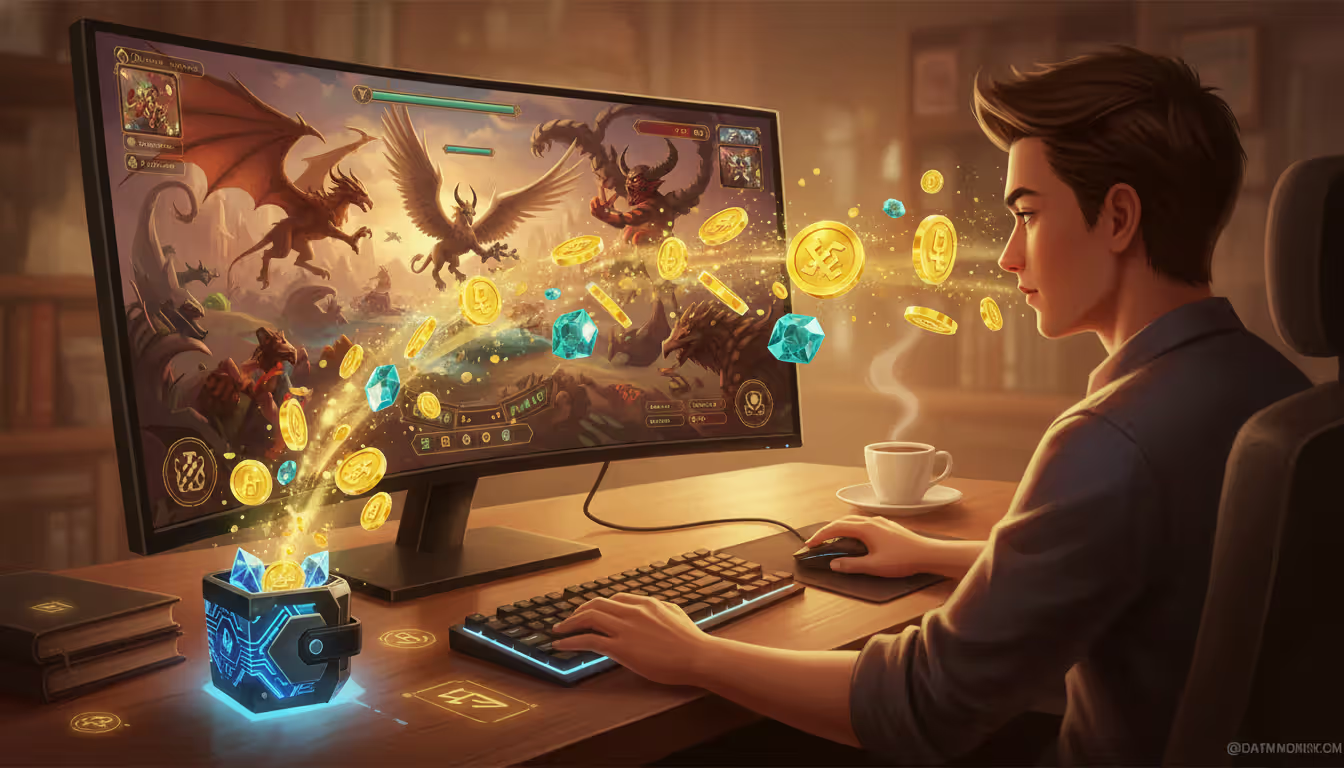
Play-to-earn (P2E) flips the traditional model: instead of paying a subscription or buying cosmetics, you invest time or money upfront and earn tradable tokens through gameplay. Early players in successful P2E games could make hundreds of dollars per month, especially in countries with lower living costs. The model attracted millions during the 2021 bull market, when token prices soared and new players bought NFTs at inflated prices hoping to flip them or grind rewards.
Play to earn gaming history traces back to experiments around 2017, but Axie Infinity brought P2E into the mainstream in 2020–2021. Players bred, battled, and traded creature NFTs called Axies, earning Smooth Love Potion (SLP) tokens. At its peak, a starter team of three Axies cost over $1,000, and daily SLP earnings could exceed $30. Scholarships emerged: asset owners lent Axies to players in the Philippines and other regions, splitting earnings. Entire communities formed around grinding Axie, and some players quit day jobs.
Tokenomics—the economic design of the game's currency—determines sustainability. Most P2E games issue rewards without a strong sink, meaning tokens flood the market faster than they are burned or removed. When new player inflow slows, token price collapses, rewards become worthless, and the player base evaporates. Axie's SLP fell from $0.40 to under $0.001 as breeding demand dried up and reward farming continued unchecked. Developers scrambled to add burning mechanisms and cap rewards, but confidence had eroded.
Successful P2E requires balanced loops: rewards must come from value created (new players buying in, external revenue, or meaningful in-game sinks), not just printing tokens. Few games have cracked this. Gods Unchained and Splinterlands introduced ranked seasons, limited card packs, and tournament entry fees to create demand for their tokens. Still, each faces the same challenge—sustaining an economy when speculative interest fades.
Author: Jordan Kessler;
Source: okogames.site
The Rise and Decline of Crypto Gaming
Crypto gaming's rise began quietly. CryptoKitties, launched in late 2017, let users breed and trade cartoon cats as NFTs on Ethereum. It clogged the network and proved digital collectibles could command real money—one kitty sold for over $170,000. But gameplay was shallow; the fad fizzled within months.
Between 2018 and 2020, developers experimented with blockchain card games, virtual worlds, and RPG hybrids. Decentraland and The Sandbox sold virtual land parcels, betting on metaverse hype. Adoption remained niche until decentralized finance (DeFi) summer in 2020 sparked broader crypto interest, and Axie Infinity's P2E model went viral in mid-2021.
The 2021 boom was explosive. Venture capital poured billions into blockchain gaming studios. Axie's daily active users topped 2.7 million. NFT trading volume on OpenSea hit $3.4 billion in a single month. Every week brought new P2E launches promising high yields. Influencers and guilds hyped token launches, and fear of missing out drove speculative buying. Traditional game studios announced blockchain pivots, and even major publishers explored NFT integrations.
Crypto gaming rise and fall accelerated in 2022. The Terra/LUNA collapse in May erased $40 billion and shook confidence across crypto. Axie's economy imploded as SLP crashed. New P2E games launched to diminishing interest; many were low-effort clones with unsustainable tokenomics. By late 2022, venture funding dried up, and the term "play-to-earn" became toxic. Studios rebranded to "play-and-earn" or dropped token mechanics entirely.

Author: Jordan Kessler;
Source: okogames.site
The 2022–2024 bear market forced a reckoning. Dozens of games shut down; others pivoted to focus on gameplay over rewards. Regulatory scrutiny increased—some jurisdictions classified P2E tokens as securities, and concerns about gambling mechanics targeting minors grew. Player sentiment soured as promised features failed to materialize and treasuries were drained by insiders.
By 2025, a smaller cohort of projects survived by emphasizing fun and long-term design. Studios learned that bolting tokens onto mediocre gameplay doesn't work. The hype cycle had passed, leaving a fragmented landscape of experimental games, die-hard communities, and cautious optimism that blockchain could add value without financializing every click.
Types of Crypto Games You Should Know
Crypto games span genres and monetization models. Understanding the categories helps you assess what each offers and the risks involved.
Play-to-Earn Games
P2E games reward players with cryptocurrency or NFTs for completing tasks, winning battles, or reaching milestones. Examples include Axie Infinity, Splinterlands, and Illuvium. Entry often requires purchasing NFTs or staking tokens. Rewards depend on token price, which fluctuates wildly. The best P2E games balance skill, strategy, and economic sinks; the worst are thinly veiled Ponzi schemes where late entrants subsidize early players.
Common mistake: treating P2E as a guaranteed income stream. Token earnings can evaporate overnight if the project loses momentum. Approach P2E as speculative entertainment, not a job replacement.
NFT-Based Games
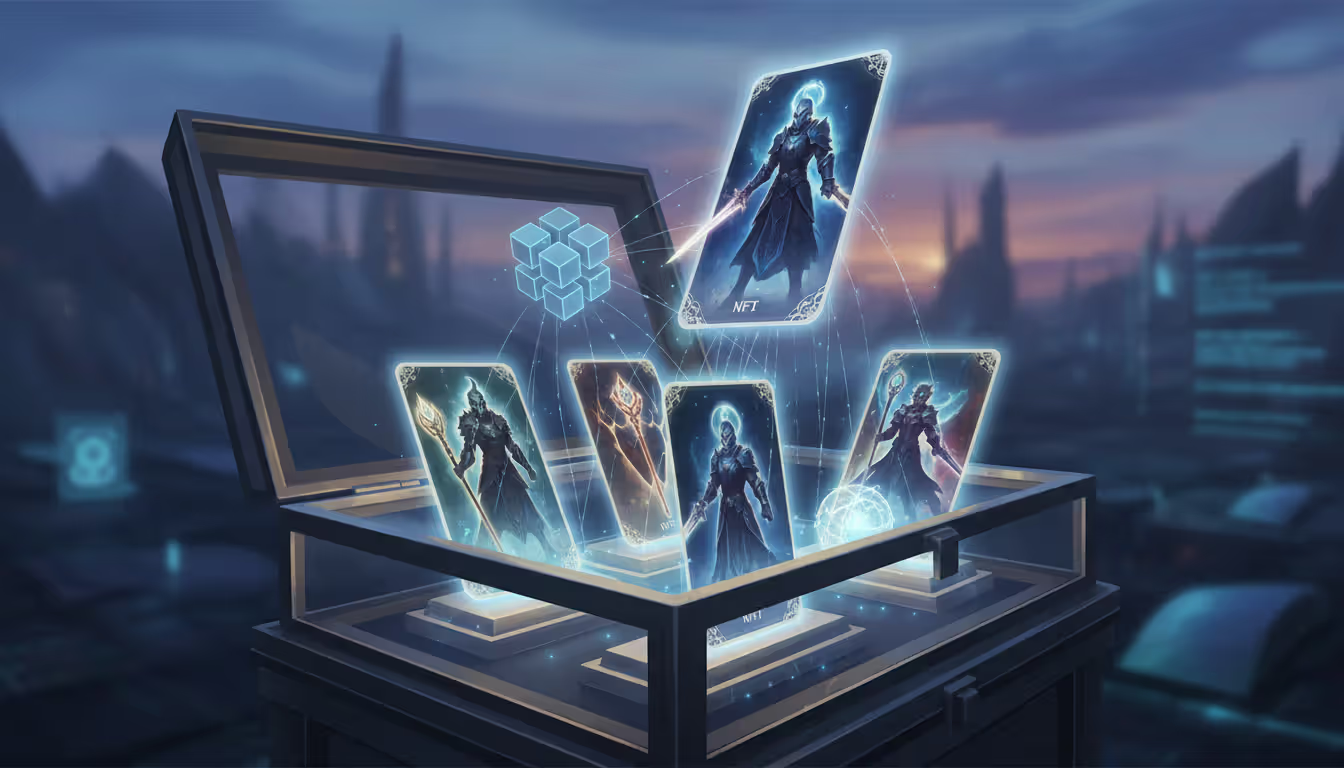
NFT games overview: these titles center on collecting, trading, and using unique digital assets. Gods Unchained is a trading card game where each card is an NFT you truly own and can sell. Sorare combines fantasy sports with NFT player cards; your lineup's real-world performance determines rewards. The Sandbox and Decentraland let you buy land NFTs, build experiences, and monetize them.
NFT games often have lower ongoing rewards but emphasize asset appreciation. You might buy a rare card hoping it becomes meta-relevant and triples in value, or purchase virtual real estate betting on foot traffic as the metaverse grows. Liquidity is a problem—selling niche NFTs can take weeks or months, and floor prices can plummet if the game's popularity wanes.
Author: Jordan Kessler;
Source: okogames.site
Web3 Metaverse Games
Web3 metaverse games are persistent virtual worlds where players own land, items, and sometimes governance rights. Decentraland and The Sandbox let users build games, galleries, or shops on their parcels and charge visitors. Otherside, by Yuga Labs, promises an MMORPG experience with NFT land and characters.
These projects bet on network effects: the more users and creators, the more valuable the ecosystem. Reality check—most metaverse plots sit empty. Building requires technical skill or hiring developers, and attracting visitors is hard when the user base is small. Speculative land flipping drove early sales; actual utility remains limited in 2026.
Pros and Cons of Playing Crypto Games
Pros:
- True ownership: Your items exist outside the game. If the developer shuts down servers, you still hold the NFTs and might use them elsewhere or retain collectible value.
- Earning potential: Skilled or early players can generate income, especially in games with strong economies and competitive modes.
- Transparent economies: On-chain data lets you analyze supply, distribution, and developer activity. You can spot red flags like insider dumping or unlimited minting.
- Interoperability potential: Some projects aim for cross-game assets. Imagine using the same avatar or weapon across multiple titles—still rare, but technically possible.
- Community governance: Token holders can vote on updates, reward structures, or treasury spending, giving players a voice in development.
Cons:
- High entry costs: Many games require buying expensive NFTs upfront. Axie once demanded $1,000+ to start; even cheaper games ask $50–$200, a barrier for casual players.
- Extreme volatility: Token prices swing 50% in days. Your earnings or NFT portfolio can lose most of its value before you cash out.
- Scams and rug pulls: Fly-by-night projects hype tokens, collect funds, then disappear. Fake NFT drops and phishing attacks target inexperienced users.
- Complexity: Managing wallets, gas fees, and private keys is confusing. One mistake—sending tokens to the wrong address or signing a malicious contract—can wipe your assets.
- Questionable gameplay: Many crypto games prioritize tokenomics over fun. Grinding for rewards feels like work, and graphics or mechanics lag years behind traditional AAA titles.
- Regulatory uncertainty: Governments are still figuring out how to treat NFTs and play-to-earn. Future restrictions could impact game operations or your ability to cash out.
Crypto gaming pros and cons boil down to a trade-off: you gain ownership and earning potential but accept financial risk, technical overhead, and often mediocre game design.
Are Crypto Games Worth Playing in 2026?
Are crypto games worth playing depends on your goals and risk tolerance. If you're chasing quick money, the answer is usually no. The gold rush ended; most players lose money or earn below minimum wage after accounting for time and initial investment. Token prices remain volatile, and sustainable P2E models are rare.
If you enjoy experimenting with new technology and can afford to lose your entry cost, some games offer unique experiences. Gods Unchained and Splinterlands provide competitive card gameplay with real ownership. The Sandbox appeals to creators who want to monetize virtual builds. Illuvium and Guild of Guardians target players who want AAA-style graphics with blockchain integration.
Who benefits:
- Speculators comfortable with high risk and willing to research tokenomics and team backgrounds.
- Early adopters who enter promising projects before hype peaks and can exit strategically.
- Creators and builders in metaverse games who have skills to develop content and attract audiences.
- Competitive players in skill-based games where rewards correlate with performance, not just time spent.
Red flags to avoid:
- Anonymous teams with no track record.
- Unrealistic yield promises (e.g., "earn $500/day playing 2 hours").
- No clear token utility or burning mechanism.
- Copycat games with minimal original development.
- Pressure to recruit others (multi-level marketing vibes).
- Locked liquidity or vesting schedules that favor insiders.
Realistic expectations: Treat crypto gaming as a hobby with potential upside, not a career. Invest only what you can lose. Diversify—don't put all funds into one game's NFTs or tokens. Stay informed about project updates, token unlocks, and market trends. If a game stops being fun, walk away; the "investment" mindset can trap you in a joyless grind.
In 2026, the space is smaller but more serious. Surviving projects focus on gameplay first, with blockchain as infrastructure rather than the headline feature. If you're curious, start with free-to-play or low-cost entry games, learn wallet security, and engage with communities to separate hype from substance.
Blockchain gaming will succeed when players forget they're using blockchain. The technology should be invisible infrastructure that enables ownership and interoperability, not a speculative gimmick. We're moving past the play-to-earn gold rush toward games that are genuinely fun and happen to have on-chain assets
— Robbie Ferguson
Frequently Asked Questions About Crypto Gaming
Crypto gaming offers a glimpse of what player-owned economies might look like, blending blockchain transparency with interactive entertainment. The early hype cycle burned many players, and the industry's reputation suffered from scams, unsustainable tokenomics, and poor gameplay. Yet the technology enables real ownership, verifiable scarcity, and new monetization models that traditional publishers can't easily replicate.
In 2026, the space is leaner and more focused. Surviving projects prioritize game design over token pumps, and developers have learned hard lessons about economic sustainability. Whether crypto gaming fulfills its potential depends on building experiences players genuinely enjoy, where blockchain adds value without turning every session into a financial calculation.
If you're considering crypto games, start small, research thoroughly, and manage expectations. Understand the risks—volatility, scams, complexity—and weigh them against the novelty of true digital ownership. Crypto gaming isn't for everyone, but for those willing to navigate its challenges, it remains one of the more experimental frontiers in interactive media.