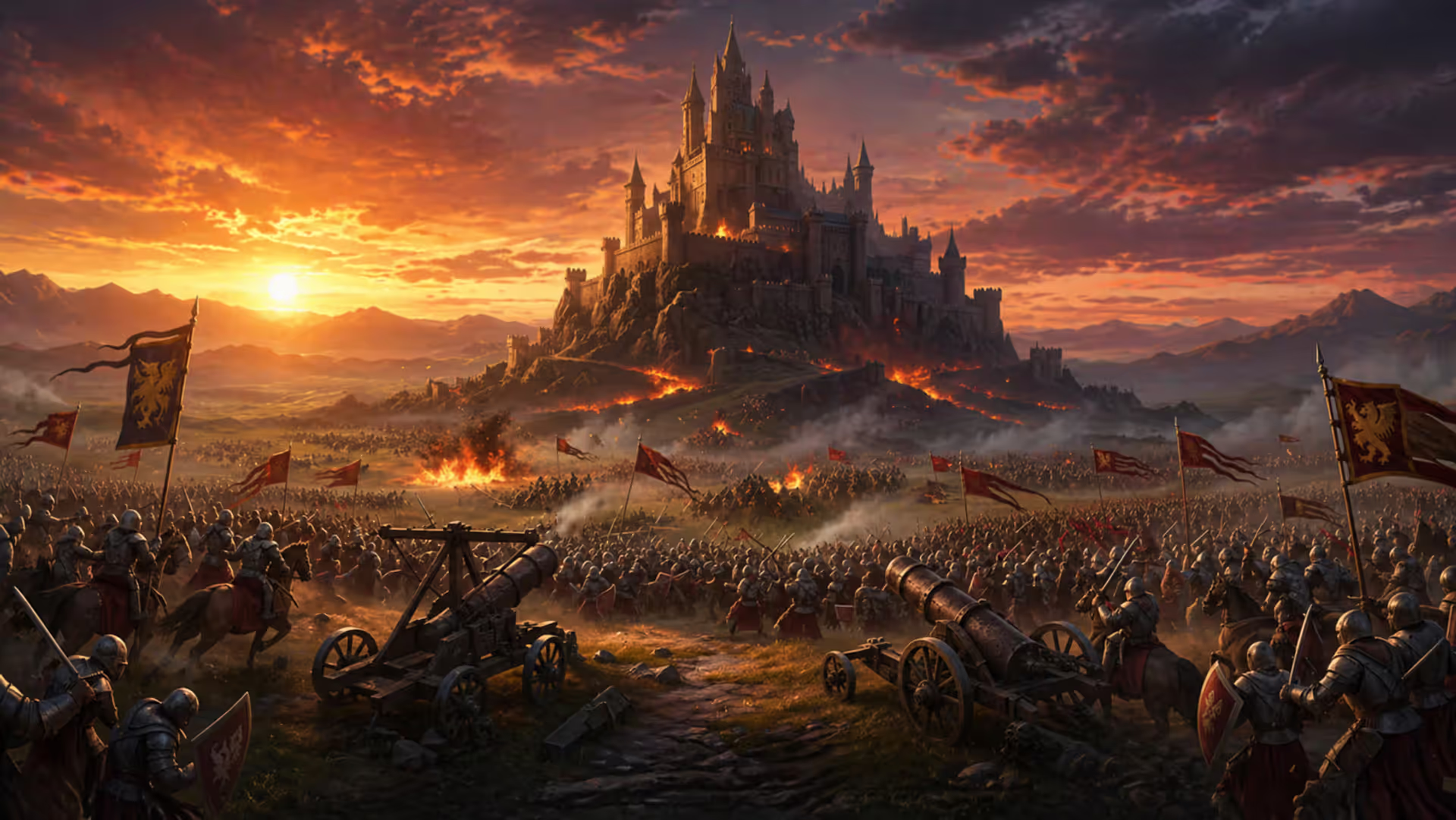
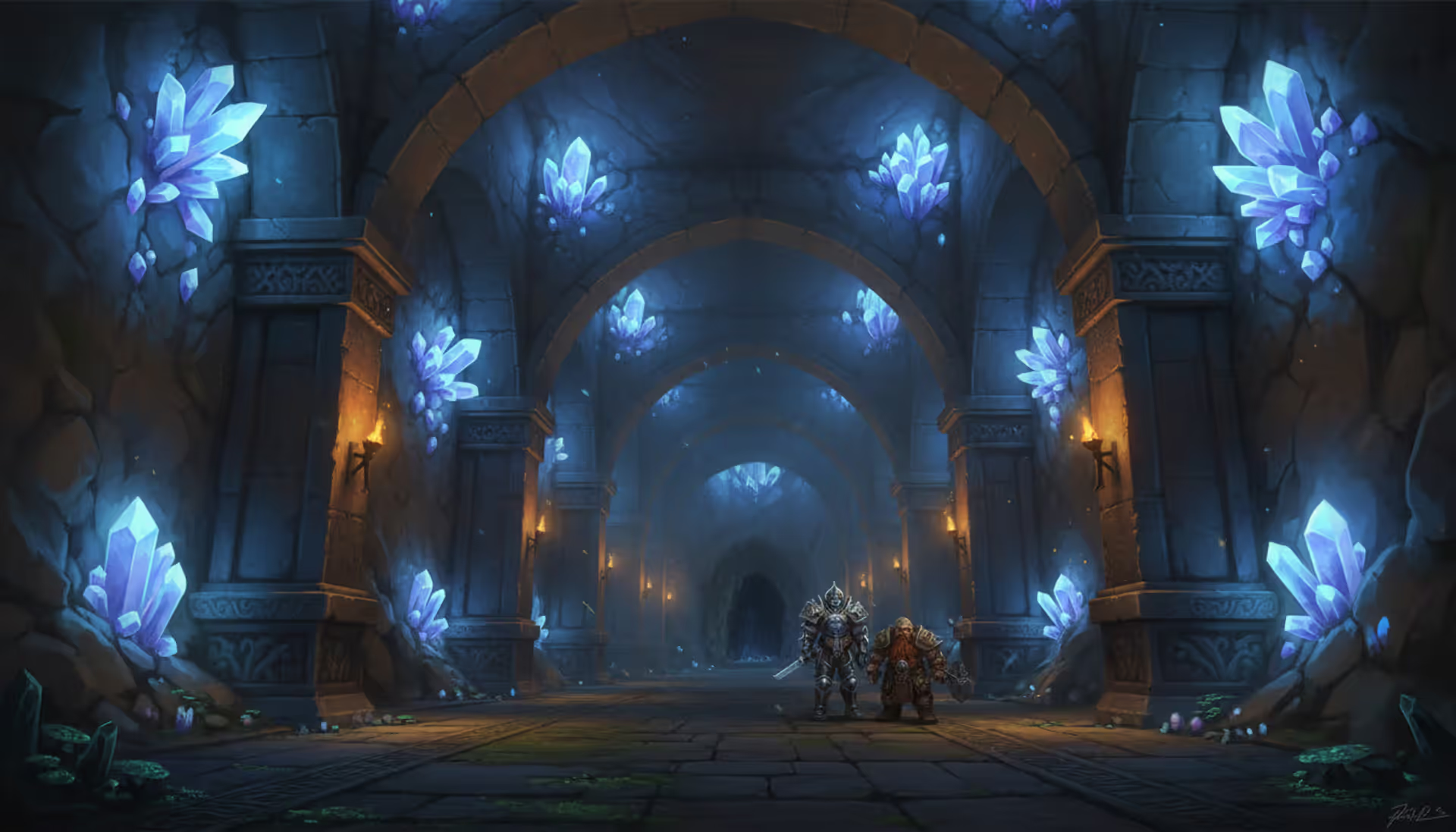
A fantasy warrior character and a dwarf companion standing at the entrance of a glowing crystal cave dungeon in World of Warcraft art style
WoW Delves Guide for Beginners

Content
Delves represent World of Warcraft's answer to players who wanted challenging, replayable instanced content without the scheduling headaches of raiding or the sometimes-toxic environment of group finder. Introduced in The War Within expansion during late 2024, Delves are short, self-contained adventures designed for 1–5 players that blend exploration, combat encounters, and puzzle elements.
Unlike traditional dungeons that require a tank, healer, and three DPS, Delves scale dynamically based on your group size. Running solo? You'll have Brann Bronzebeard as your AI companion who can tank or heal depending on your spec. Bringing friends? The difficulty adjusts automatically, and Brann steps aside.
The core appeal lies in flexibility. You can knock out a Delve in 15–25 minutes during a lunch break, or spend an evening pushing higher tiers for better rewards. Each Delve features unique environmental storytelling, hidden treasures, and boss mechanics that actually require attention even at lower tiers—a refreshing change from faceroll world content.
Blizzard designed this system specifically to give solo and small-group players access to endgame-quality gear without forcing them into content they don't enjoy. By 2026, Delves have become a cornerstone of WoW's gearing ecosystem, sitting comfortably alongside Mythic+ dungeons and raiding as a viable progression path.
How the Delves Tier System Works
The tier system governs difficulty and rewards, ranging from Tier 1 (introductory) to Tier 11 and beyond. Each tier represents a significant jump in enemy health, damage output, and mechanic complexity. You won't accidentally wander into content above your pay grade—you manually select your tier before entering.
Tier Difficulty Scaling
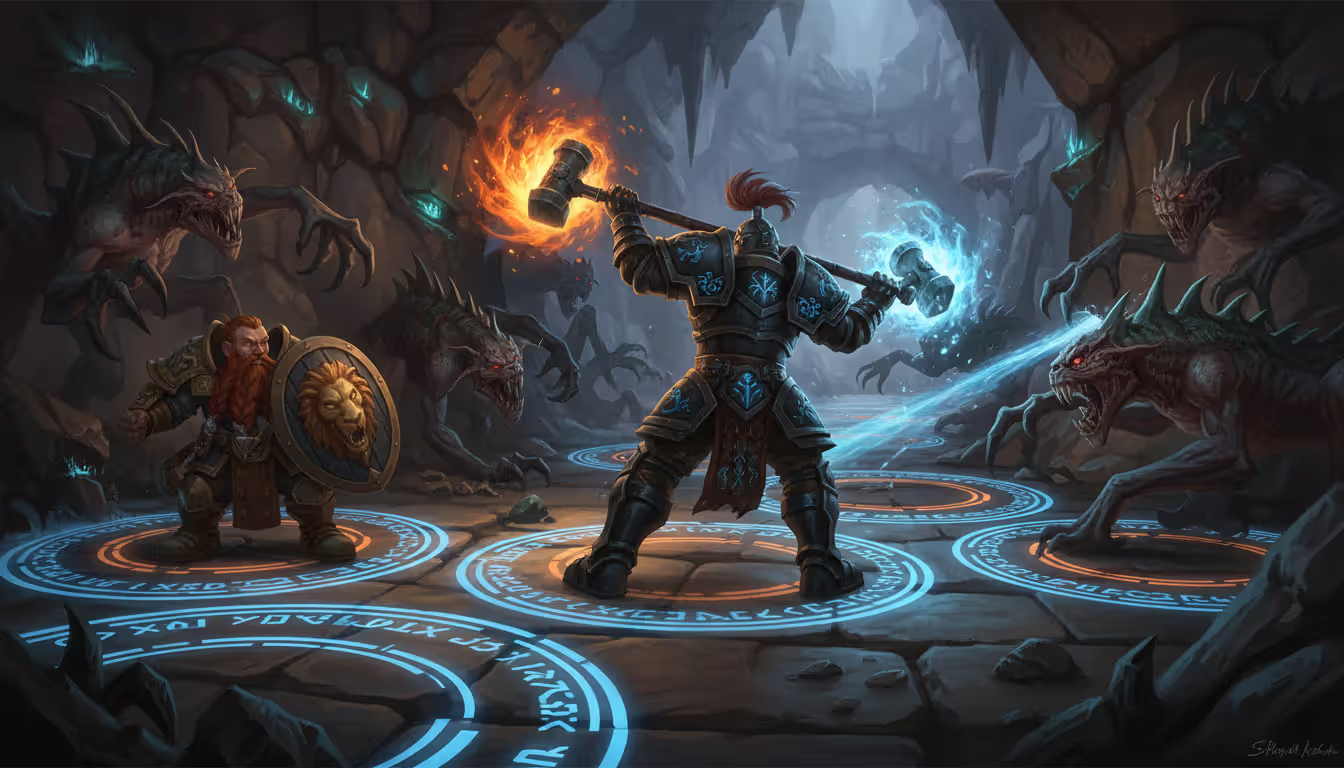
Tier 1 through 3 serves as the onboarding experience. Enemies telegraph abilities clearly, damage is forgiving, and you can learn mechanics without instant-death consequences. Most fresh max-level characters in quest greens can handle Tier 1 immediately.
Tier 4 through 7 introduces the first real gear checks. Enemies start using overlapping mechanics—interrupt one ability while dodging another, then handle a third simultaneously. Tank specs running solo will notice Brann's healing struggles if you're standing in avoidable damage. This range typically requires item level 580–610 depending on player skill and class.
Tier 8 through 11 enters what the community calls "push content." Mechanics become punishing, trash packs can wipe you faster than bosses, and defensive cooldown management becomes mandatory. Some affixes appear at these tiers that modify enemy behavior weekly, similar to Mythic+ but less intrusive. Expect to need item level 615+ with proper enchants and gems.
Beyond Tier 11, the system continues scaling infinitely for players chasing leaderboard rankings, though rewards cap at Tier 11 for practical purposes.
Author: Megan Crosley;
Source: okogames.site
Unlocking Higher Tiers
You don't grind reputation or complete achievement chains to unlock tiers. Instead, you simply need to complete the previous tier successfully. Finish a Tier 4? Tier 5 becomes available. This straightforward progression respects your time—no artificial gates or weekly lockouts preventing advancement.
One common mistake: assuming you need to complete every Delve at a tier before moving up. You only need to finish one Delve at Tier X to unlock Tier X+1 across all Delves. If you find Earthcrawl Mines easier than Fungal Folly, just farm Mines for your unlocks.
The system also tracks your highest completed tier account-wide for alts. Your fresh alt won't start at Tier 1 if your main has cleared Tier 8—though jumping straight to Tier 8 on undergeared alts is a recipe for frustration.
Key Mechanics You Need to Know Before Running Delves
Brann Bronzebeard isn't just flavor text—he's your lifeline in solo content. You choose between two roles for him: tank or healer. DPS and most healers want tank Brann to hold aggro while you burn enemies down. Tank specs obviously want healer Brann, though his healing throughput caps around Tier 6–7 for most classes, forcing tanks to rely more on self-healing at higher tiers.
Brann has his own progression system. You earn Brann XP by completing Delves, which unlocks new abilities and improves his stats. A level 1 Brann versus a level 60 Brann makes a night-and-day difference in survivability. Neglecting his progression is the #1 reason players hit walls around Tier 5.
Death penalties exist but aren't crippling. Unlike Mythic+ where deaths add time penalties, Delves simply limit your total deaths. Die five times in a single run and you fail the Delve, getting booted out with reduced rewards. This creates tension without the stopwatch stress—you can take pulls slowly, reset if things go wrong, and play cautiously without worrying about a timer ticking down.
There's no enrage timer on bosses either. Spend ten minutes on a fight learning mechanics if needed. The game rewards execution over speed at the base level, though optional time-based objectives exist for bonus rewards.
Role considerations matter more than players expect. Ranged DPS have significant advantages in many Delves with tight quarters where melee need to dodge constantly. Conversely, some Delves feature spread-out enemy packs where melee can cleave efficiently while ranged waste time repositioning. No class is locked out, but understanding your class's strengths helps you pick efficient Delves.
Delves Rewards and Loot Tables
Rewards come from three sources: end-of-run drops, Bountiful Coffers (weekly bonus chests), and miscellaneous cosmetics/reputation.
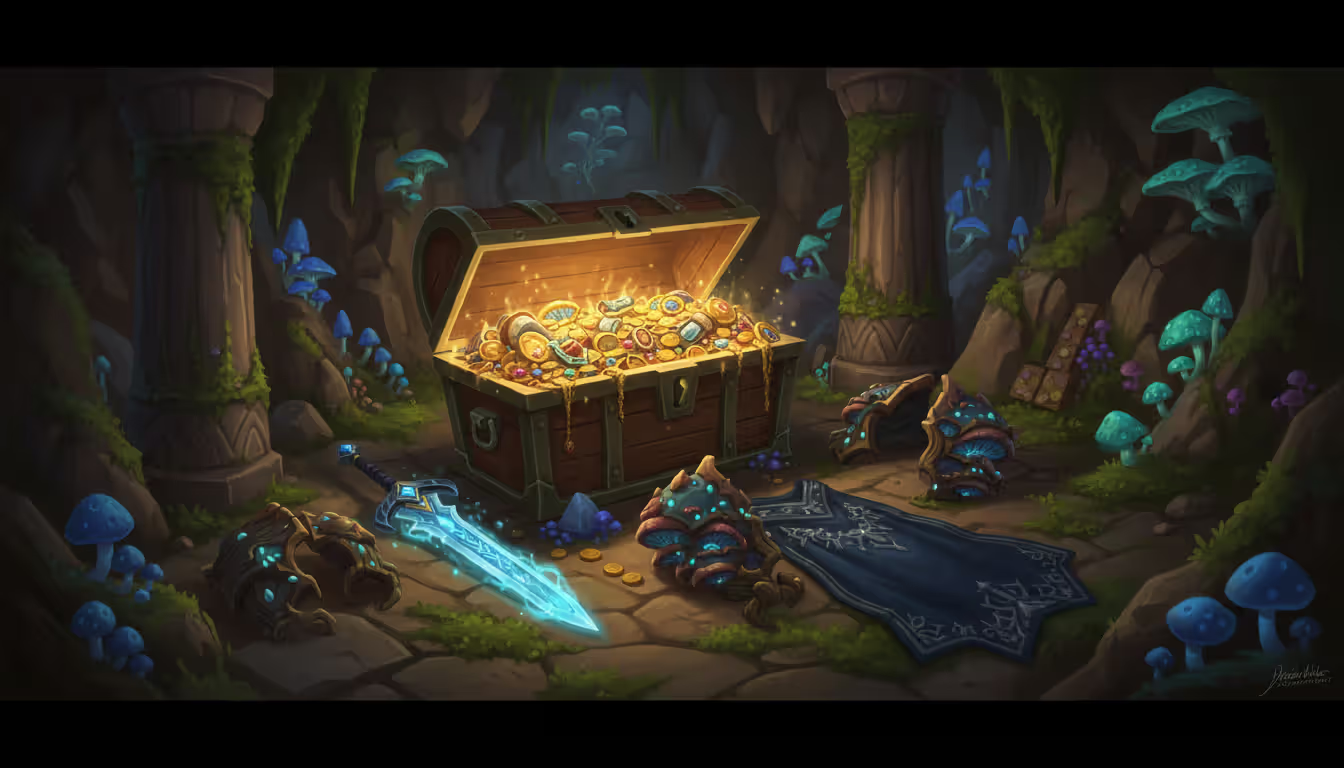
End-of-run loot scales directly with tier completed. Finish Tier 5, get Tier 5 appropriate gear. The system uses personal loot—you always get something, though it might be a duplicate slot or an item for an off-spec. No trading, no drama over who gets what.
Bountiful Coffers represent your weekly "big reward." You earn coffer keys by completing Delves, and can open a limited number of special chests per week that drop higher item level gear than the tier you completed. A Tier 7 Delve might drop 606 gear normally, but the Bountiful Coffer could award 616 gear. This system lets skilled players punch above their weight class—complete content at your gear level, get rewards for the next tier up.
Item Level by Tier
| Tier Number | Recommended Item Level | End-of-Run Item Level | Bountiful Coffer Item Level | Estimated Completion Time |
| 1 | 554+ | 554 | 564 | 12–18 min |
| 3 | 567+ | 567 | 577 | 15–20 min |
| 5 | 580+ | 593 | 603 | 18–25 min |
| 7 | 600+ | 606 | 616 | 20–28 min |
| 8 | 610+ | 610 | 623 | 22–30 min |
| 9 | 615+ | 613 | 626 | 25–35 min |
| 11 | 625+ | 619 | 632 | 30–45 min |
These numbers reflect 2026 tuning after several balance patches. Early seasons had much stingier rewards, but Blizzard adjusted upward following community feedback about Delves feeling unrewarding compared to time investment.
Special Rewards and Cosmetics
Beyond gear, Delves drop unique transmog sets tied to specific Delve locations. Earthcrawl Mines has dwarf-themed heritage armor recolors, while Mycomancer Cavern offers mushroom-covered cloth sets that glow in the dark. Completionists will need to farm specific Delves repeatedly for these drops.
Reputation with the faction tied to each Delve zone accumulates passively. Hit exalted and you'll unlock profession recipes, toys, and sometimes mounts. It's not fast—expect several weeks of regular Delve running—but it happens naturally without dedicated grinding.
Upgrade tokens called Valorstones drop from all Delves and let you incrementally improve gear item level at the item upgrade NPC. These are uncapped, so you can farm lower tiers efficiently for upgrade materials even after outgearing the content.
Author: Megan Crosley;
Source: okogames.site
Best Delves to Run for Efficiency
Not all Delves are created equal. Layout, enemy density, and boss mechanics create significant time differences.
Earthcrawl Mines consistently ranks as the fastest. Straightforward linear path, no backtracking, and the final boss has a simple two-mechanic dance. Expect 12–15 minute clears at appropriate gear levels. The trade-off? Boring after the twentieth run.
Kriegval's Rest offers the best loot-per-time ratio if you're farming specific trinkets. It's slightly longer than Mines (16–20 minutes) but has an extra mini-boss that drops from a separate loot table, effectively giving you two chances at upgrades.
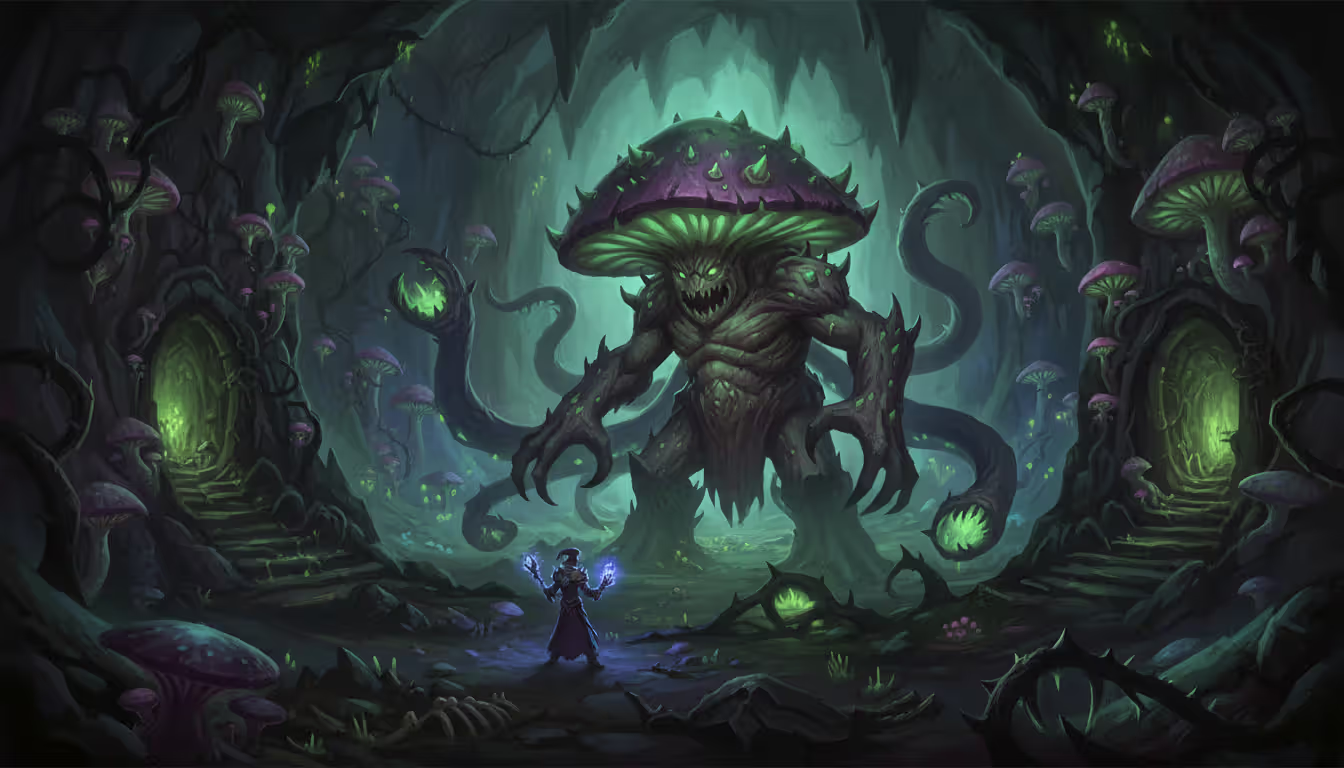
Fungal Folly is the nightmare Delve everyone avoids unless they need its specific transmog set. Maze-like layout, enemies that spawn adds when killed incorrectly, and a final boss with a mandatory puzzle phase that can't be DPS-burned. Budget 30+ minutes even at lower tiers.
For solo players, Nightfall Sanctum deserves special mention. The entire Delve is designed around Brann's tanking AI, with clearly defined tank-and-spank encounters that don't punish you for not having a human tank's reaction time. Melee DPS particularly appreciate this one.
If you're farming Valorstones specifically, chain-run Tier 3 Earthcrawl Mines. You'll complete it in 10–12 minutes with decent gear, earning nearly as many Valorstones as higher tiers but with zero risk and maximum consistency.
Author: Megan Crosley;
Source: okogames.site
Delves vs Mythic Plus: Which Should You Choose?
This isn't an either-or question for most players in 2026, but understanding the trade-offs helps you prioritize time.
Time investment: A Mythic+2 through +7 takes 25–40 minutes with a competent group. Delves run 15–30 minutes depending on tier. Advantage: Delves, but only slightly.
Scheduling flexibility: Mythic+ requires assembling four other humans with compatible schedules. Delves you can run at 2 AM in your underwear. Massive advantage: Delves.
Skill ceiling: Mythic+ at the +15 to +20 range demands near-perfect execution, intimate knowledge of every dungeon, and class mastery. Tier 11 Delves are challenging but more forgiving of mistakes. You won't get flamed by teammates for missing an interrupt in a Delve.
Reward parity: This changed significantly in 2026. Previously, Mythic+ offered substantially better gear, making Delves feel like a consolation prize. Current tuning puts Tier 11 Delves on par with Mythic+10 rewards, and Bountiful Coffers can drop gear equivalent to Mythic+12. You won't fall behind avoiding group content anymore.
Social experience: Mythic+ forces interaction, which is either a pro or con depending on personality. Delves let you listen to podcasts and zone out between pulls. Neither is superior—know what you value.
Delves were designed to validate solo play as a first-class endgame path, not a stepping stone to 'real' content. If you never set foot in a Mythic dungeon but push Delves every season, you're playing the game correctly
— Hazzikostas
Most optimized players run both. Delves for weekly Bountiful Coffers and Valorstone farming, Mythic+ for specific trinkets and weapons that have better secondary stat distributions. The systems complement rather than compete.
Seasonal Rotation and Content Updates
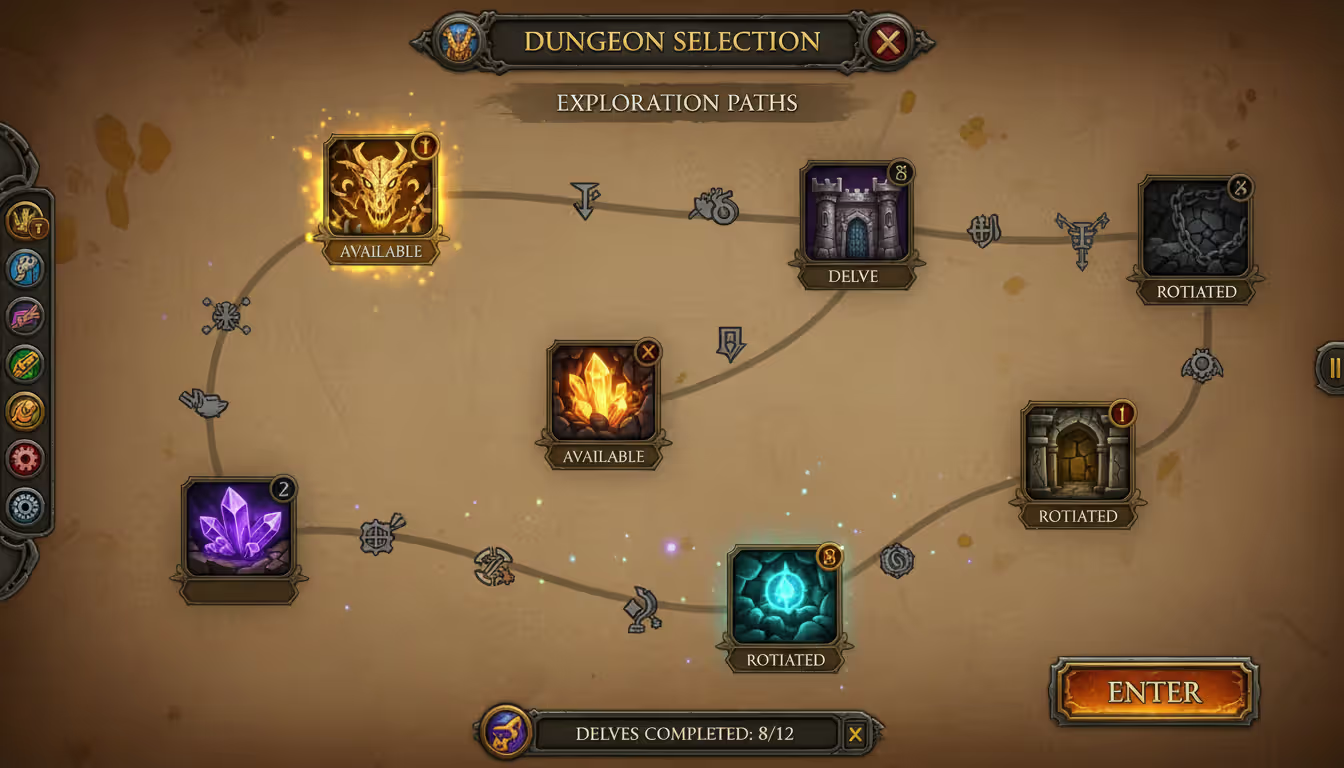
Blizzard rotates Delve availability seasonally to prevent burnout and keep the content fresh. Season 1 of The War Within featured eight Delves. Season 2 retired two, added three new ones, and updated mechanics in the returning six. By 2026's Season 4, the rotation includes twelve total Delves with seven active at any given time.
This rotation has pros and cons. Positive: returning Delves often feature updated mechanics or new bonus objectives, so you're not running identical content for two years straight. Negative: if your favorite Delve gets rotated out, you're stuck waiting potentially six months for its return.
Seasonal affixes also modify Delves at Tier 8+. These are less intrusive than Mythic+ affixes—think "enemies occasionally spawn a healing orb you can pick up" rather than "every enemy explodes on death." Affixes rotate weekly within a season, adding mild variety without fundamentally changing strategies.
Patch updates mid-season typically adjust tuning rather than adding content. If data shows 80% of players get stuck at Tier 6, Blizzard might reduce enemy health by 5–10% in a hotfix. Conversely, if Tier 11 becomes too farmable, they'll buff it. Check patch notes every two weeks for these tweaks.
The seasonal model means your Delve progress resets partially each season. Your highest tier unlocked carries over, but you'll need to re-earn Bountiful Coffer keys through the new season's currency system. It's a soft reset that respects your time investment while providing clear seasonal goals.
Author: Megan Crosley;
Source: okogames.site
Frequently Asked Questions About Delves
Delves solved a problem WoW struggled with for years: giving solo and small-group players meaningful endgame progression without forcing them into content they actively dislike. The tier system provides clear goals, rewards scale appropriately with effort, and the lack of rigid lockouts respects your time.
Whether you're a returning player intimidated by Mythic+ toxicity, a solo main who wants to avoid guild drama, or just someone who enjoys 20-minute gameplay sessions between life obligations, Delves offer a viable path to endgame gear. Start at Tier 1, work your way up as gear improves, and don't sleep on upgrading Brann—his progression matters as much as your own.
The system isn't perfect. Some Delves have frustrating layouts, seasonal rotations can remove your favorite content for months, and the highest tiers still require group coordination for most players. But compared to the "raid or fall behind" paradigm of previous expansions, Delves represent a massive quality-of-life improvement.
Jump in, experiment with different Delves to find your favorites, and remember that efficiency isn't everything. Sometimes the "worst" Delve for speed-running is the most enjoyable for actual gameplay. The best Delve to run is the one you'll actually finish.