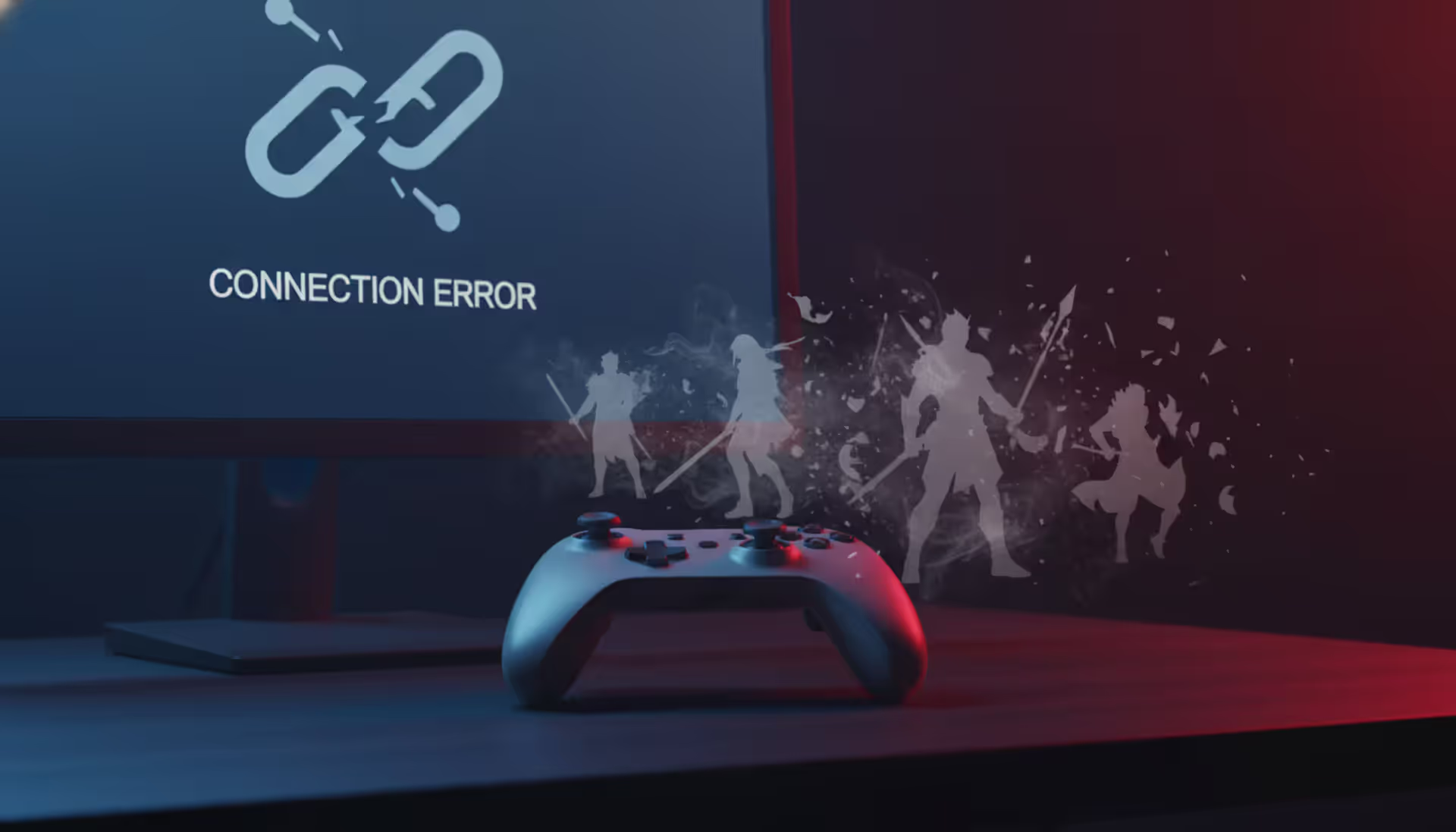
A game controller on a dark desk with a monitor showing a connection error icon and fading translucent silhouettes of video game characters in dramatic blue and red lighting
Stop Killing Games Petition Explained

Content
Video games have evolved from physical cartridges you could play forever into online services that publishers can switch off whenever they choose. When a company decides to shut down a game's servers, players lose access to products they paid for—sometimes hundreds of dollars worth of content vanishes overnight. The Stop Killing Games petition emerged as a response to this growing problem, demanding legal protections that would preserve access to purchased games even after official support ends.
What Is the Stop Killing Games Petition
Ross Scott, creator of the Freeman's Mind series and a long-time gaming content creator, launched the Stop Killing Games initiative in late 2023 after Ubisoft shut down The Crew's servers. The game became completely unplayable despite players purchasing it at full retail price. This wasn't just about one title—it represented a pattern across the industry where publishers treated sold games as temporary rentals.
The petition's core demand is straightforward: require publishers to leave games in a functional state after ending support. This doesn't mean companies must maintain servers indefinitely. Instead, they should either patch games to work without authentication servers, release server software for community hosting, or provide tools that let players continue playing what they bought.
By early 2026, the campaign had gathered over 400,000 signatures across multiple regional petitions. The European Citizens' Initiative version reached the threshold needed to trigger a formal EU response, while parallel efforts in the United States, Canada, Australia, and the United Kingdom pushed for similar legislative reviews. The campaign specifically targets governments rather than individual companies, seeking systemic legal changes rather than voluntary industry reform.
The petition doesn't ask for free ongoing development or new content. Publishers could still sunset live service features, shut down matchmaking, or stop creating updates. The requirement is simple: don't render purchased software permanently non-functional through deliberate design choices when support ends.
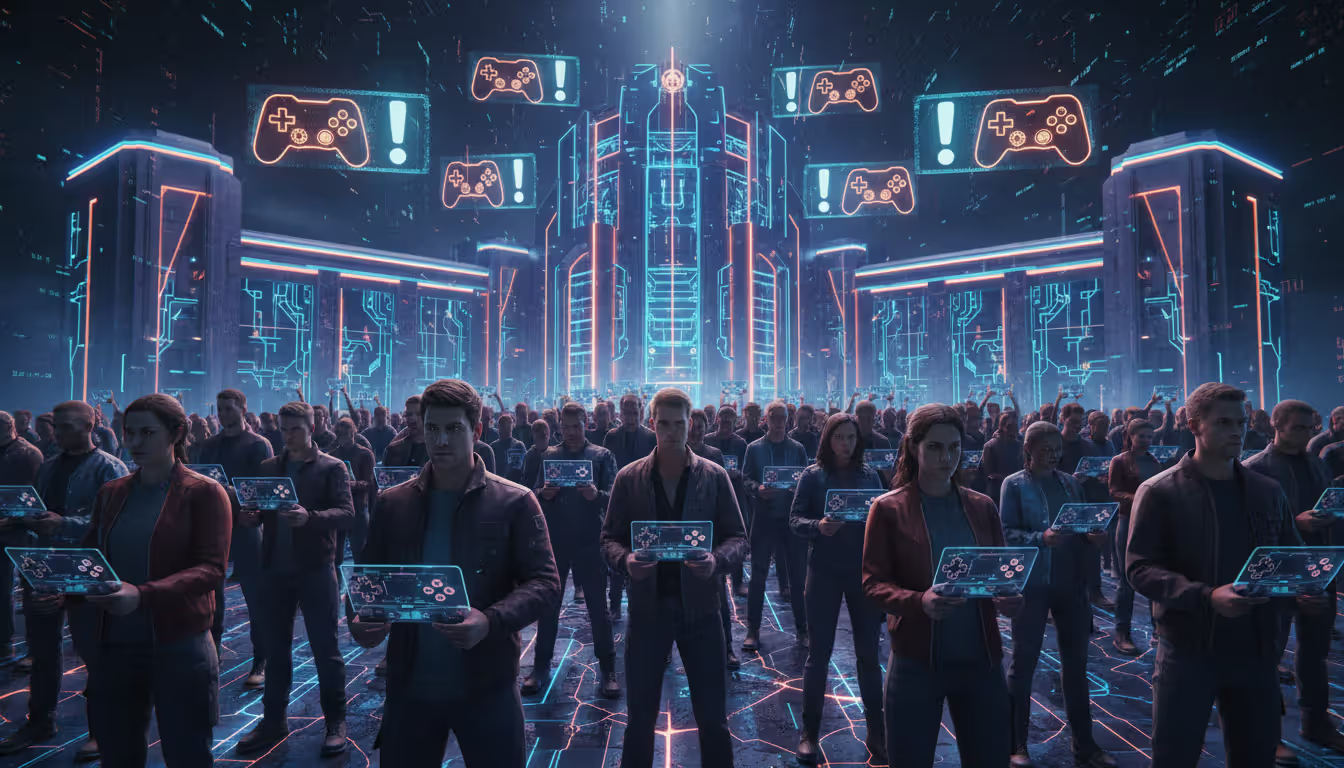
Author: Ethan Rowland;
Source: okogames.site
Why Game Servers Shut Down and What Players Lose
Publishers shut down game servers for several business reasons. Low player counts make ongoing maintenance costs exceed revenue. Licensing agreements for music, sports leagues, or intellectual property expire and become too expensive to renew. Companies redirect resources toward newer titles with better monetization potential. Sometimes corporate restructuring, studio closures, or bankruptcy leave games without anyone to maintain them.
When servers go dark, players lose everything tied to that game. Single-player campaigns requiring online authentication become inaccessible. Multiplayer modes obviously stop working. Cosmetic items purchased through microtransactions disappear. Progress, achievements, and hundreds of hours of gameplay vanish. Unlike a physical book or DVD that remains functional regardless of publisher status, always-online games become expensive digital paperweights.
The financial impact extends beyond the initial purchase price. Many games as a service encourage ongoing spending through battle passes, character skins, weapon blueprints, and seasonal content. Players might spend $60 on the base game, then another $200 over two years on additional content—only to lose access to everything when shutdown notices arrive.
Notable Game Shutdown Cases
The gaming industry has witnessed numerous high-profile shutdowns that left players empty-handed:
| Game Title | Release Year | Shutdown Year | Reason | Refund Offered | Estimated Players Affected |
| The Crew | 2014 | 2024 | Low player count | No | ~12 million |
| Anthem | 2019 | 2025 | Failed live service model | No | ~2 million |
| Marvel's Avengers | 2020 | 2025 | Poor monetization performance | No | ~3 million |
| Babylons Fall | 2022 | 2023 | Commercial failure | No | ~1,000 |
| Knockout City | 2021 | 2023 | Unsustainable costs | No | ~500,000 |
| Rumbleverse | 2022 | 2023 | Publisher decision | No | ~300,000 |
| Crossfire X | 2022 | 2024 | Low engagement | No | ~100,000 |
| Roller Champions | 2022 | 2024 | Failed retention | No | ~250,000 |
| Hyper Scape | 2020 | 2022 | Unable to compete | No | ~400,000 |
| Lawbreakers | 2017 | 2018 | Insufficient player base | No | ~7,500 |
None of these cases offered refunds despite rendering purchased products permanently unusable. Players who bought deluxe editions, season passes, or in-game currency received no compensation when publishers pulled the plug.
Financial Impact on Players
Consider a typical scenario: someone purchases a game at launch for $70, buys a season pass for $40, and spends another $90 on cosmetic items over eighteen months. They've invested $200 and roughly 300 hours building their character, completing challenges, and connecting with friends through the game. When shutdown announcements come—often with just 60 to 90 days' notice—that entire investment evaporates.
Contrast this with traditional game purchases. Someone who bought Super Mario Bros. in 1985 can still play it today on original hardware. Physical media degradation is a separate issue from artificial restrictions that make functional software deliberately inaccessible. The games as a service model fundamentally changed this relationship between purchase and ownership.
How the Games as a Service Model Works
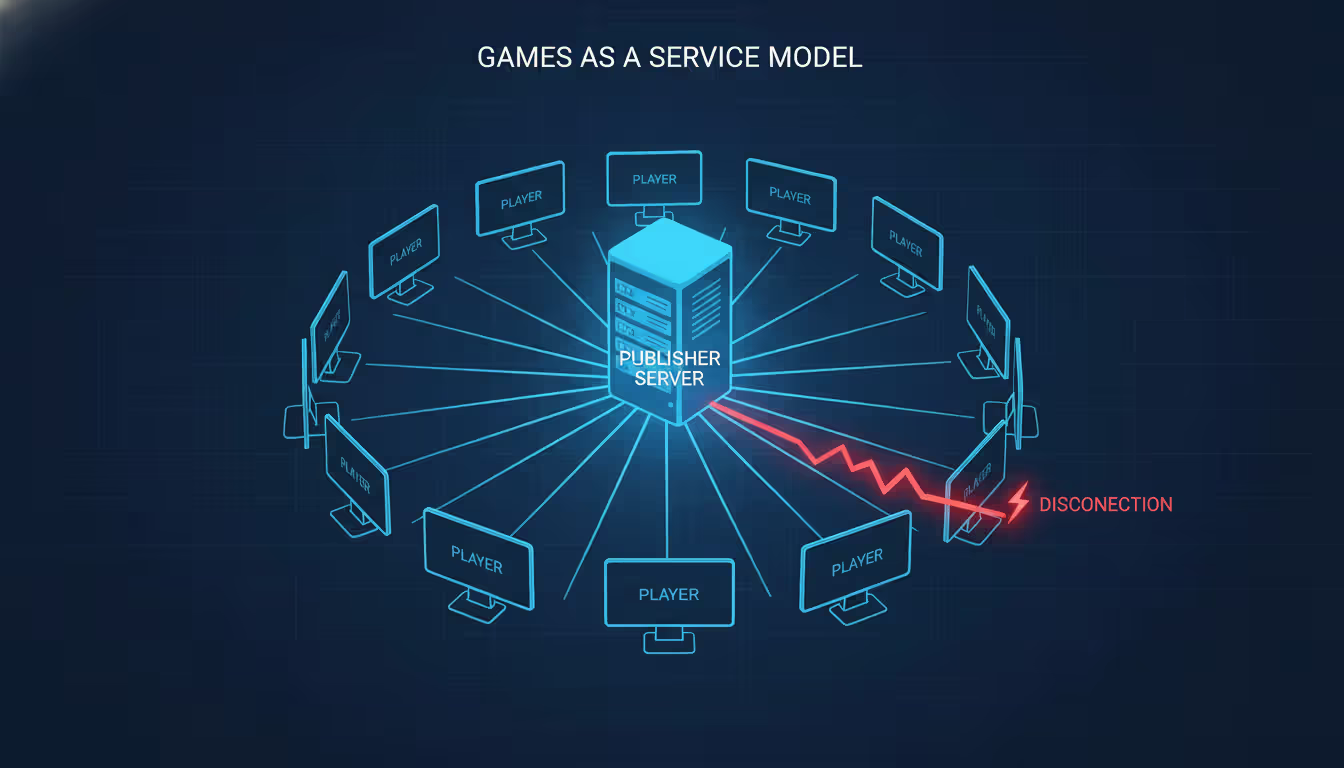
Games as a service (GaaS) represents a business model where publishers treat games as ongoing platforms rather than finished products. Instead of developing a complete game, releasing it, and moving to the next project, companies create frameworks designed for continuous content updates, seasonal events, and perpetual monetization.
The model relies on always-online requirements even for single-player content. This design choice serves multiple purposes: it enables telemetry collection for player behavior analysis, prevents unauthorized modifications, enforces digital rights management, and creates dependency on publisher-controlled infrastructure. When players launch the game, their client authenticates with company servers before allowing access to any content.
Author: Ethan Rowland;
Source: okogames.site
Traditional games provided complete experiences at purchase. You bought a cartridge or disc containing all necessary files to play. Updates were rare, substantial, and often optional. The publisher's ongoing involvement ended after sale. Games as a service inverts this relationship—the initial purchase is merely the entry point to an ongoing relationship requiring continuous publisher support.
Publishers prefer this model because it generates recurring revenue through microtransactions, battle passes, and seasonal content. Rather than selling five million copies once, they can monetize a smaller player base repeatedly over years. A game with one million active players spending an average of $10 monthly generates $120 million annually—far exceeding most traditional retail sales.
The always online game controversy stems from this dependency. Players question why single-player content requires internet connections and server authentication. Publishers claim it prevents piracy and enables seamless multiplayer integration, but critics argue it's primarily about control and monetization. When authentication servers shut down, even offline-capable content becomes inaccessible by design rather than technical necessity.
Digital Game Ownership vs. Licensing Rights
When you purchase a digital game, you're not buying the software itself—you're buying a license to access it under specific conditions. This distinction matters enormously when servers shut down or publishers revoke access.
Terms of service agreements, which few players read but all must accept, explicitly state that purchases grant limited, revocable licenses rather than ownership. These agreements typically include clauses allowing publishers to modify, suspend, or terminate access at any time, for any reason, without refund obligations. Courts have generally upheld these terms, leaving players with minimal legal recourse.
The first-sale doctrine, which allows resale of physical media, doesn't apply to digital licenses. You can sell a used book or DVD, but selling your Steam account or individual game licenses violates platform terms of service. This asymmetry means digital purchases carry fewer rights than physical equivalents despite often costing the same or more.
Legal precedents have consistently favored publishers. In 2013, the Supreme Court declined to hear a case challenging game server shutdowns. Lower courts have ruled that terms of service adequately disclose the temporary nature of access, placing responsibility on consumers to understand what they're purchasing. Consumer protection laws haven't caught up with digital goods, leaving gaps that the Stop Killing Games petition aims to address.
Gaming consumer rights explained through current law reveal a stark reality: you have almost no guaranteed rights to continued access. Publishers face no legal obligation to maintain functionality, provide refunds when shutting down games, or give advance notice beyond what terms of service specify (often as little as 30 days). Some jurisdictions like the European Union offer slightly better protections, but enforcement remains inconsistent.
The Game Preservation Movement and Consumer Rights
Game preservation advocates argue that video games represent significant cultural artifacts deserving protection similar to films, music, and literature. The medium has produced works of artistic merit, historical importance, and cultural impact that risk permanent loss when publishers abandon them.
The Video Game History Foundation estimates that 87% of classic games released before 2010 are commercially unavailable. Unlike books that remain in libraries or films preserved in archives, games often exist only on obsolete hardware or depend on defunct online services. When publishers shut down servers without releasing tools for preservation, these works effectively cease to exist.
Current advocacy efforts focus on three approaches: legal reform through initiatives like Stop Killing Games, technical preservation through organizations like the Internet Archive and Software Preservation Society, and cultural pressure encouraging publishers to consider legacy access. Each approach faces distinct challenges.
Legal challenges include industry lobbying against preservation exemptions, concerns about intellectual property protections, and the complexity of international digital commerce law. Publishers argue that requiring post-support functionality would impose excessive costs, though critics note that simple authentication removal or server software release would address most concerns with minimal expense.
Comparison to other media reveals inconsistencies. The film industry fought home video recording but ultimately thrived despite initial resistance. Music streaming coexists with permanent purchases and physical media. Books remain available in libraries decades after publication. Gaming uniquely combines aggressive digital rights management with planned obsolescence, creating a preservation crisis unlike other entertainment sectors.
We're not asking for companies to support games forever. We're asking them not to deliberately design games to be destroyed when support ends. There's a massive difference between 'we won't maintain this anymore' and 'we're going to make sure nobody can ever play this again.' One is a business decision; the other is destruction of purchased property
— Ross Scott
Gaming consumer rights explained through preservation lenses highlight broader issues about digital ownership, corporate power over culture, and the balance between business interests and public access to art. The movement argues that once publishers have profited from sales, they shouldn't retain perpetual power to erase those works from existence.
How to Support Game Preservation Efforts
Supporting game preservation requires multiple approaches since the issue spans legal, cultural, and technical domains.
Signing the Stop Killing Games petition remains the most direct action. Regional versions exist for different jurisdictions, each targeting appropriate legislative bodies. The European Citizens' Initiative requires EU citizenship verification, while US versions operate through traditional petition platforms. Providing accurate information increases petition credibility and legislative impact.
Contacting legislators directly amplifies petition efforts. Representatives respond to constituent communication, particularly when multiple voters raise the same concern. Specific, personal messages carry more weight than form letters. Explain your experience with game shutdowns, the money you've lost, and why legal protections matter. Request support for legislation requiring post-support functionality preservation.
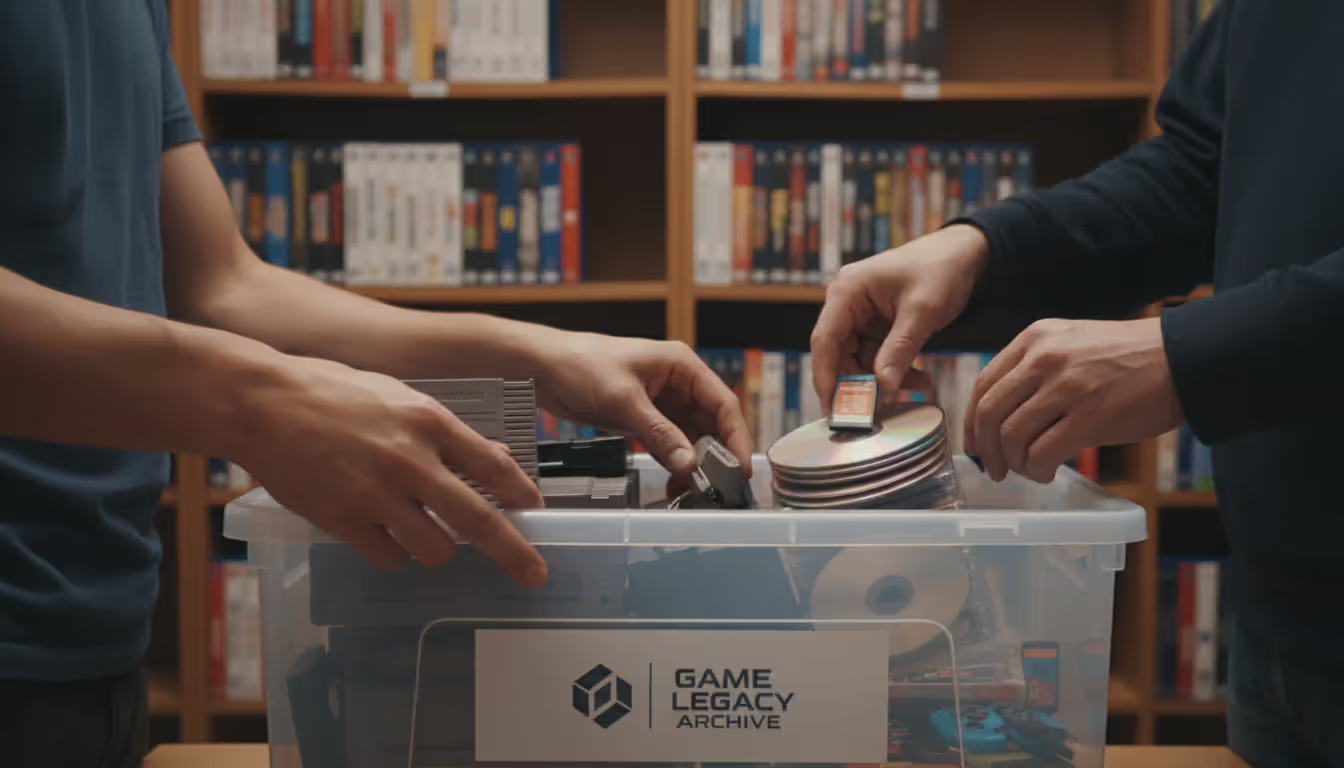
Supporting preservation organizations financially or through volunteer work helps maintain technical infrastructure for archiving games. The Video Game History Foundation, Internet Archive, and similar groups operate on limited budgets while facing legal challenges from publishers. Donations, technical expertise, or simply spreading awareness of their work contributes to preservation goals.
Author: Ethan Rowland;
Source: okogames.site
Making informed purchases sends market signals to publishers. Prioritize games with offline modes, DRM-free options, or publishers with track records of supporting legacy access. When companies release games without always-online requirements, reward that choice with your money. Conversely, avoiding games designed for inevitable obsolescence demonstrates consumer demand for sustainable models.
Participating in community discussions, writing reviews that mention preservation concerns, and educating other players about digital ownership issues creates cultural pressure. Many players remain unaware of the distinction between ownership and licensing or don't realize their purchased games can disappear. Raising awareness builds momentum for both legal reform and market-driven changes.
FAQ About Game Shutdowns and Player Rights
The Stop Killing Games petition addresses a fundamental question about digital ownership: when you purchase software, do you have any right to continued access, or are publishers free to render your purchases worthless whenever they choose? Current law largely favors publishers, leaving players with expensive licenses that can vanish at corporate discretion.
Game preservation matters not just for consumer protection but for cultural heritage. Video games represent a significant artistic medium that risks losing much of its history to planned obsolescence and corporate abandonment. Unlike books, films, or music, games face unique preservation challenges when publishers design them to stop working after support ends.
The petition's success depends on sustained pressure across multiple fronts: legislative advocacy, market choices, cultural awareness, and technical preservation efforts. Change won't happen quickly, but the growing momentum demonstrates that players are questioning the sustainability and ethics of current industry practices.
Whether you've lost access to a favorite game, worry about future purchases becoming unplayable, or simply believe in preserving cultural works, supporting game preservation efforts contributes to a larger movement. The goal isn't to burden publishers with impossible demands—it's to ensure that when you buy a game, you're purchasing something with lasting value rather than a temporary rental disguised as a sale.